
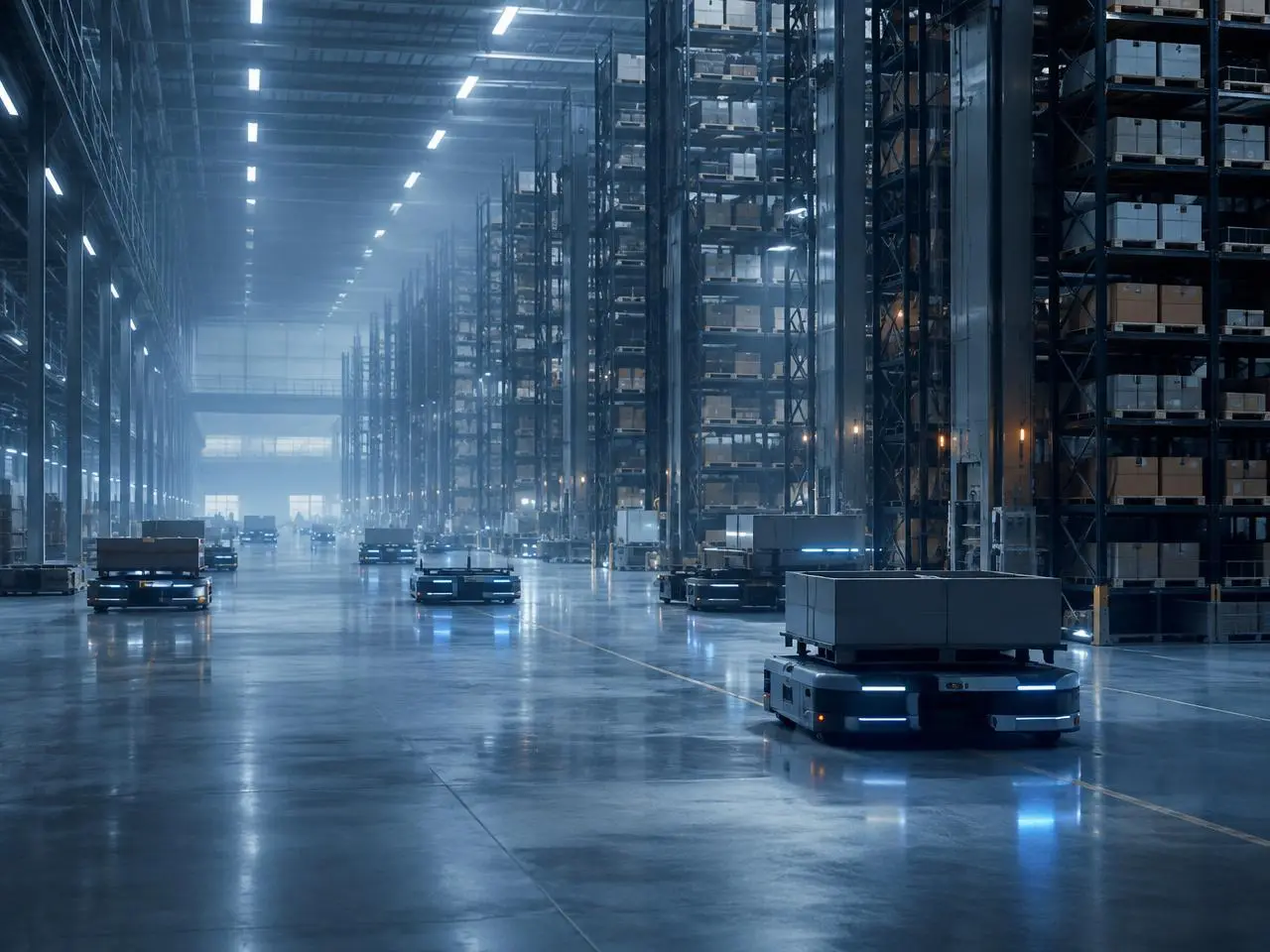
You may be a plant engineer sketching a new packing line, an operations manager replacing manual transport between zones, or a procurement lead assembling an RFQ (request for quotation, the document that asks suppliers to price a defined scope). The decision in front of you is how much of the project to hand to one firm, and how to compare the firms that bid on it. That choice shapes who carries the risk if the system does not perform, what the price includes, and which documents your own team still has to produce.
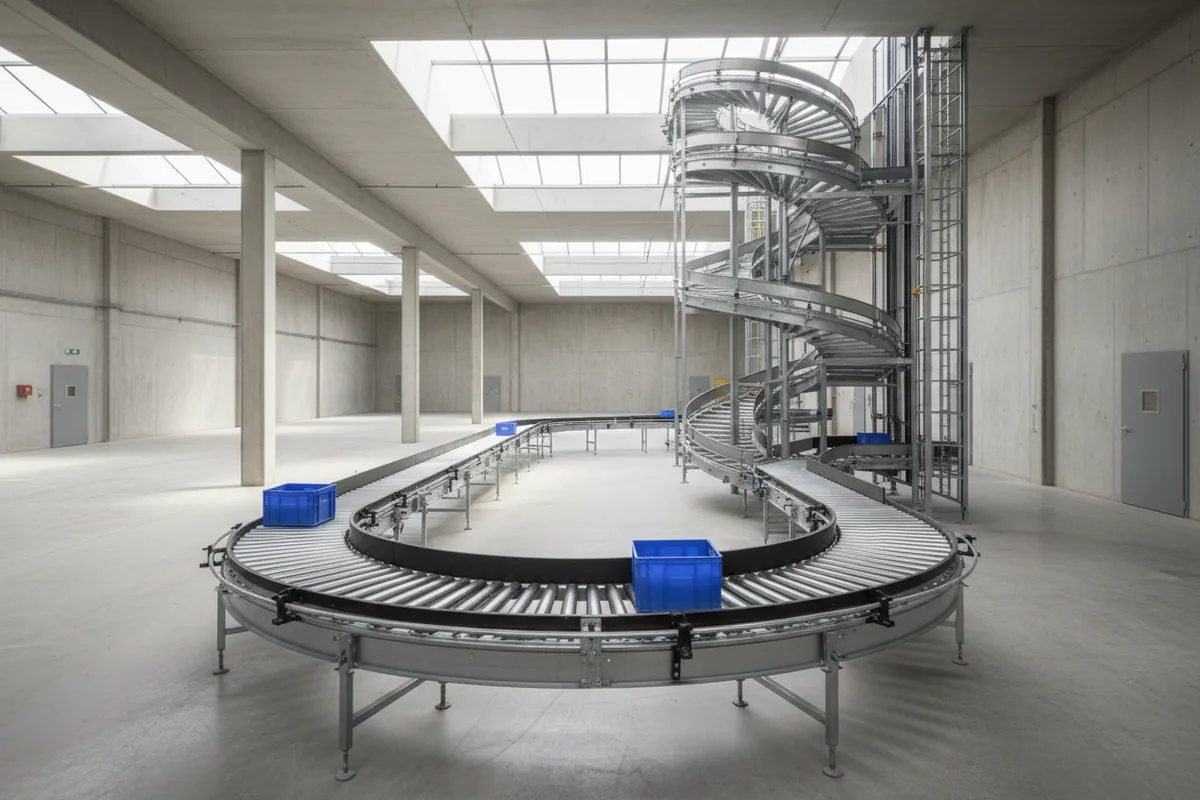
A conveyor system integrator is a firm that designs, sources, assembles, programs and commissions a conveyor system built from many components and vendors, so the finished line works as one system. For a plant or warehouse planning new material flow, the integrator's role is to take responsibility for how the whole system performs, not only to deliver conveyor hardware to the dock.
On this page
- Key Takeaways for Conveyor System Integration Projects
- What Facilities and Operations Conveyor System Integrators Serve
- How Conveyor System Integration Works: From Scope to Commissioning
- Conveyor System Types and Integration Approaches
- How to Evaluate a Conveyor System Integrator
- What Drives the Cost of a Conveyor System Integration Project
- When a Conveyor System Integrator Is Not the Right Fit
- Questions to Ask a Conveyor System Integrator Before You Commit
- Frequently asked questions
- Sources
Key Takeaways for Conveyor System Integration Projects
The central difference between buying conveyor equipment and hiring an integrator is accountability. An equipment purchase delivers sections, drives and parts to a specification you wrote. An integrator, under its contract, takes on system performance: the conveyors, the controls that run them and the hand-offs to the software around them.
- Integration combines disciplines. A full-scope integrator usually brings together mechanical design, electrical work, controls and software connectivity under one project.
- Controls are the connective layer. A PLC (programmable logic controller) is the industrial computer that runs the conveyor logic; an HMI (human-machine interface) is the screen operators use; SCADA (supervisory control and data acquisition) is the software that monitors and supervises equipment across a site.
- Software hand-offs are their own scope. A WMS (warehouse management system), an MES (manufacturing execution system, which tracks production on the floor) and an ERP (enterprise resource planning system, the business system of record) may all need to exchange data with the conveyor controls.
- Scope, site conditions and existing systems drive complexity and cost. The more zones, control points, software links and site constraints a project has, the more design and coordination it requires.
- Federal safety rules sit underneath the design. OSHA's machine guarding and hazardous energy regulations, both described with the project phases, apply to employers, and the contract and design documents show how a system is built with them in view.
- Industry standards come up in evaluation. A buyer can ask each integrator which industry standards its designs reference, including any from the Conveyor Equipment Manufacturers Association (CEMA).
What Facilities and Operations Conveyor System Integrators Serve
Conveyor integration enters the picture where material flow is too complex for a single catalog conveyor line. The facility types where that complexity tends to arise include:
- Distribution centers, where cartons move from receiving to storage, picking and shipping.
- Fulfillment warehouses, where individual orders are picked, packed and routed to outbound lanes.
- Manufacturing plants, where parts and work-in-process travel between cells, assembly stations and inspection.
- Food and beverage processing, where product moves through processing, packaging and palletizing.
- Automotive assembly, where components and subassemblies travel to and along the line.
- E-commerce sortation, where mixed parcels are scanned and diverted to destinations.
OSHA describes the warehousing and storage industry as establishments operating facilities for general merchandise, refrigerated goods and other products, which may also provide logistical services relating to goods distribution, according to its Warehousing page. The same OSHA page lists potential hazards in that industry, including those associated with powered industrial trucks (forklifts), ergonomics, material handling, hazardous chemicals, slip, trip and falls, and robotics.
The operating profile that calls for an integrator is usually one of several conditions: high volume, several zones, many product types, or flow across more than one level. A second signal is software. A facility that needs its conveyors to receive routing instructions from a WMS, report to an MES or confirm transactions in an ERP is buying an integration problem as much as a conveyor.
The opposite profile also exists. A single-zone line that moves one product type, with no software hand-off, may be met by a standalone conveyor purchase. Projects whose main goal is dense storage rather than flow, such as an ASRS (automated storage and retrieval system), usually involve ASRS integrators rather than conveyor integrators alone.
How Conveyor System Integration Works: From Scope to Commissioning
An integration project moves through a sequence of phases, each with its own deliverables and its own decisions for the owner. The phases that follow describe the work in general terms; the integrator's contract defines what each one includes.
Step 1: Site assessment and requirements definition
The integrator studies the building, the products, the loads and the flows the system has to handle. Your team supplies accurate facility drawings, confirms which utilities are available and states the requirements the system is meant to meet.
Step 2: System design and layout
The integrator produces a layout and design documents showing conveyor paths, zones, merges, diverts and control points. Owner approval of these documents usually marks the point after which changes become formal scope changes.
Step 3: Equipment specification and sourcing
Conveyor sections, drives, sensors, scanners and controls hardware are specified and purchased, from one manufacturer or several, depending on the scope model.
Step 4: Fabrication and assembly
Custom components are built, and some assemblies may be pre-tested before shipping to the site.
Step 5: Controls programming
The PLC logic, HMI screens and any SCADA functions are developed. Software integration with a WMS, MES or ERP is a distinct scope item; a contract defines it explicitly rather than assuming it comes with the controls work.
Step 6: Installation
Equipment is set, anchored, wired and connected. The federal machine guarding regulation states that machines designed for a fixed location shall be securely anchored to prevent walking or moving (29 C.F.R. § 1910.212).
Step 7: Commissioning and acceptance testing
Commissioning is the process of confirming that the installed system performs to the agreed specification before responsibility passes from the integrator to the owner. Acceptance testing is the owner's formal check against agreed criteria, and the owner's presence at that test is part of the owner's role.
Step 8: Training and handoff
Operators and maintenance staff are trained, and documentation, drawings and program files are handed over.
How long the phases take
The length of a project is not a fixed figure. It follows the same factors that shape scope and price: the number of zones and control points, how much custom fabrication the design needs, how long equipment sourcing takes from each manufacturer, the depth of software integration and whether installation is sequenced around a live operation. The integrator's proposal and project schedule set out the expected duration of each phase for a given line.
Safety rules across the phases
Safety rules run through every phase. Under 29 U.S.C. § 654, each employer shall furnish employment and a place of employment free from recognized hazards that are causing or are likely to cause death or serious physical harm to employees, and shall comply with occupational safety and health standards. The machine guarding regulation, 29 C.F.R. § 1910.212, states that one or more methods of machine guarding shall be provided to protect the operator and other employees in the machine area from hazards such as those created by point of operation, ingoing nip points, rotating parts, flying chips and sparks; it gives barrier guards, two-hand tripping devices and electronic safety devices as examples. It also states that guards shall be affixed to the machine where possible and secured elsewhere if attachment is not possible, and that a guard shall not offer an accident hazard in itself.
The hazardous energy regulation, 29 C.F.R. § 1910.147, requires the employer to establish a program of energy control procedures, employee training and periodic inspections so that, before any employee services or maintains a machine where unexpected energizing, start-up or release of stored energy could cause injury, the machine is isolated from the energy source and rendered inoperative. Lockout/tagout means placing a lock, or a tag where a lock cannot be applied, on an energy isolating device. The regulation states that after January 2, 1990, whenever new machines or equipment are installed, or replacement or major repair, renovation or modification is performed, energy isolating devices shall be designed to accept a lockout device. It also generally requires documented energy control procedures, with an exception the regulation lists in eight conditions. OSHA and the equipment maker settle how these rules apply to a given installation.
Conveyor System Types and Integration Approaches
Two choices shape a conveyor project: which conveyor types the flow requires, and how the work is divided between the owner and the integrator. The conveyor types, in plain terms:
- Belt conveyors carry items on a continuous moving belt and suit cartons, totes, loose items and inclines.
- Gravity roller conveyors let items roll on unpowered rollers along a slope, often in short transfers or staging lanes.
- Powered roller conveyors drive the rollers so items with firm, flat bottoms move along level runs and through zones.
- Chain conveyors move pallets, heavy containers or parts on chains, often in manufacturing and palletizing areas.
- Overhead conveyors carry parts or garments suspended from a track above the floor, freeing floor space and serving paint, finishing and assembly lines.
- Sortation conveyors divert items to destinations; cross-belt sorters carry items on small belts that discharge sideways, tilt-tray sorters tip trays to release items, and sliding shoe sorters push items off the line at an angle.
- Accumulation conveyors hold items in a queue without forcing them against one another, buffering flow between processes that run at different rates.
Mobile robots are sometimes integrated alongside conveyor lines. An AMR (autonomous mobile robot) navigates on its own map; an AGV (automated guided vehicle) follows fixed guidance paths. Either one is a distinct scope from conveyor integration.
The integration model decides who holds performance risk:
| Integration model | Who designs | Who procures hardware | Who programs controls and software | Who holds system performance risk |
|---|---|---|---|---|
| Turnkey | Integrator | Integrator | Integrator | Integrator, through commissioning |
| Design-build | Integrator | Shared; the owner manages some procurement | Integrator | Shared, as the contract divides it |
| Controls-only | Owner or another party | Owner | Integrator handles PLC, HMI, SCADA and software | Integrator for controls; the owner for hardware |
Under a turnkey scope, one contract covers the whole system. Under design-build, owner-procured items sit outside the integrator's performance responsibility unless the contract says otherwise. Under controls-only, the owner carries the risk that the hardware it chose fits the controls design.
How to Evaluate a Conveyor System Integrator
Neutral criteria make proposals comparable. The criteria that follow apply to any integrator a buyer considers, and none of them depends on a firm's marketing claims.
- Scope alignment. Compare the integrator's documented project experience with your facility type, the conveyor types in the design and the controls platform the plant uses, including the PLC brand and the WMS or MES in place.
- Controls and software capability. Some integrators handle mechanical scope and subcontract controls; others carry PLC, HMI, SCADA and software integration in-house. Which model a firm uses changes who answers when a fault sits between the conveyor and the software.
- Project management structure. Ask how subcontractors are managed, who holds the single point of accountability and how design changes are documented and priced.
- Safety documentation. Ask how machine guarding and lockout/tagout provisions under 29 C.F.R. § 1910.212 and 29 C.F.R. § 1910.147 appear in the integrator's design documents and handoff package.
- References and site visits. Request references from projects of comparable scope, facility type and controls complexity, and ask to see a commissioned installation in operation.
- Warranty and post-commissioning support. Clarify what is covered after acceptance testing, for how long and under what conditions, along with how support requests are handled.
- Schedule. Ask for the proposed duration of each phase and which items, such as equipment sourcing or software interfaces, the schedule depends on.
- Standards familiarity. Ask which industry standards the design references, including any from CEMA, and how the integrator documents that reference in its drawings.
Fit runs in both directions. An integrator may decline or refer out a very small single-zone line, a process conveyor outside its documented experience or a project that requires service contracts only the original equipment manufacturer (OEM) provides. A firm that states those limits plainly gives a buyer useful information about where its experience lies.
For a team preparing an RFQ, these criteria also shape the request itself: the same questions, posed to every bidder in the same words, produce answers that can sit side by side.
What Drives the Cost of a Conveyor System Integration Project
Conveyor integration has no fixed or statutory fee; the price comes from the integrator's written proposal or quote, built on the scope it is asked to cover. The factors that move that number:
System scope. Linear footage and the number of zones set the physical size. Conveyor type and load capacity determine the equipment class. Each control point (a scanner, a sensor, a diverter, a merge) adds hardware, wiring and logic.
Controls complexity. The number of PLCs, the number of HMI screens and the reach of any SCADA functions shape the programming and testing effort.
Software integration depth. A conveyor that only runs on its own carries less integration work than one that receives routing from a WMS, reports status to an MES and posts transactions to an ERP. Each interface needs definition, development and testing.
Site conditions. Building height and structural limits affect overhead and multi-level designs. Existing utility infrastructure may need upgrades. Floor flatness and load ratings affect anchoring and supports. A greenfield site, a new building or empty space, differs from a retrofit into a live operation, where work has to be sequenced around production or shipping.
Scope model. Because the scope models divide work and risk differently, a single contract price is not comparable across them. The comparison that matters is the total across every contract the project needs, including any hardware or controls work the owner buys separately.
Ongoing costs. Total cost of ownership, the full cost of the system over its working life, includes a spare parts inventory, preventive maintenance contracts, software license renewals and training for in-house maintenance staff.
The integrator's written proposal is the source for the project's cost, and proposals built on the same scope documents are the ones that can be compared line by line.
When a Conveyor System Integrator Is Not the Right Fit
An integrator adds coordination and accountability, and that value is smaller in some projects. Four profiles point toward another path.
A simple line. A single-zone, low-SKU, low-volume line with no custom controls or software hand-off may be met by a standard conveyor bought direct from an OEM. The owner then carries installation coordination and performance responsibility.
Strong in-house controls engineering. A facility whose own engineers program PLCs and HMIs and maintain the WMS interface may buy hardware and handle integration internally. The trade-off is that internal staff time, and the risk of a fault between systems, stays inside the company.
Storage density as the real goal. Where the main requirement is storing more in less space rather than moving material, ASRS integrators address that need, sometimes with conveyors feeding the storage system.
Sound conveyors, outdated controls. Where the existing conveyor equipment is in good condition, the real need may be a controls upgrade or a new WMS integration rather than a new system. A controls-only engagement fits that profile.
Each of these paths moves some responsibility back to the owner, and that shift is the point to consider alongside price.
Questions to Ask a Conveyor System Integrator Before You Commit
These questions are ones a buyer can put to every integrator in the same words, so the answers line up.
- What conveyor types and controls platforms does your firm have documented project experience with? The answer shows whether the firm's past work matches the design and the plant's existing PLC and software.
- Who holds single-point accountability for system performance through commissioning? A named party answers for faults that cross mechanical, controls and software boundaries.
- How do you document machine guarding and lockout/tagout provisions in your project deliverables? The handoff package is what maintenance and safety staff work from after the integrator leaves.
- What does your acceptance testing protocol cover, and what are the pass and fail criteria? Written criteria decide when responsibility transfers and what happens when a test is not passed.
- What is the proposed schedule for each phase, and what does it depend on? The answer shows which sourcing, fabrication or software items set the project's length.
- What is included in your post-commissioning warranty, and what triggers a warranty call? Coverage terms set who pays for the first faults after startup.
- How do you handle scope changes after design approval, and what is the change-order process? Changes after approval are where budgets and schedules move, so the pricing method matters.
- Which CEMA standards does your design reference? The answer shows how the firm ties its design choices to published industry practice.
Ahead of an RFQ, a practical next step is finding out whether the facility's current layout drawings, utility single-line diagrams and WMS or MES interface specifications are up to date, since every integrator builds its scope and price from those documents.
Independent referral
Your next project deserves a clearer starting point.
Describe your requirements. Where there is a fit, we may introduce you to relevant providers.
Industrial Technology Exchange
How the independent referral process works
- DescribeSubmit a short inquiry describing your project, facility and timeline.
- ReviewWe review the inquiry for clarity and fit. Incomplete or out-of-scope requests may not be referred.
- ConnectWith your consent, relevant third-party providers may contact you. You decide whether to engage.
Testimonials
Frequently asked questions
What is a conveyor system integrator?
A conveyor system integrator designs, sources, assembles, programs and commissions a conveyor system that combines mechanical, electrical, controls and software work, so the finished system performs as a whole. An OEM conveyor manufacturer makes the equipment; the integrator, under its contract, takes responsibility for system-level performance.
How much does a conveyor system cost?
No fixed or statutory fee applies. Cost follows conveyor type, linear footage, the number of control points, controls complexity, software integration depth, site conditions and the scope model. The integrator's written proposal or quote states the project's cost.
What do designed conveyor systems do?
A designed, custom-integrated conveyor system moves products along a defined path, with controls that manage routing, accumulation, sortation and hand-offs to systems such as a WMS or MES. Unlike an off-the-shelf line, it is engineered to the facility's own layout, load profile and software environment.
What are the main types of conveyor systems used in warehouses and manufacturing plants?
The main types are belt, gravity roller, powered roller, chain, overhead, sortation (cross-belt, tilt-tray and sliding shoe) and accumulation conveyors. Each suits different loads: belts for cartons and inclines, chains for pallets and heavy parts, overhead lines for suspended parts, sorters for routing and accumulation for buffering flow.
What is the difference between a turnkey integrator and a controls-only integrator?
A turnkey integrator owns the full scope from design through commissioning and holds system performance risk. A controls-only integrator handles PLC, HMI, SCADA and software work on hardware the owner has procured, so the owner keeps responsibility for whether that hardware fits the design.
What OSHA regulations apply to conveyor systems?
29 C.F.R. § 1910.212 requires one or more methods of machine guarding against hazards such as point of operation, ingoing nip points, rotating parts, flying chips and sparks. 29 C.F.R. § 1910.147 governs hazardous energy control during servicing and maintenance. OSHA's Warehousing page lists material handling among warehousing hazards; OSHA decides how these rules apply.