
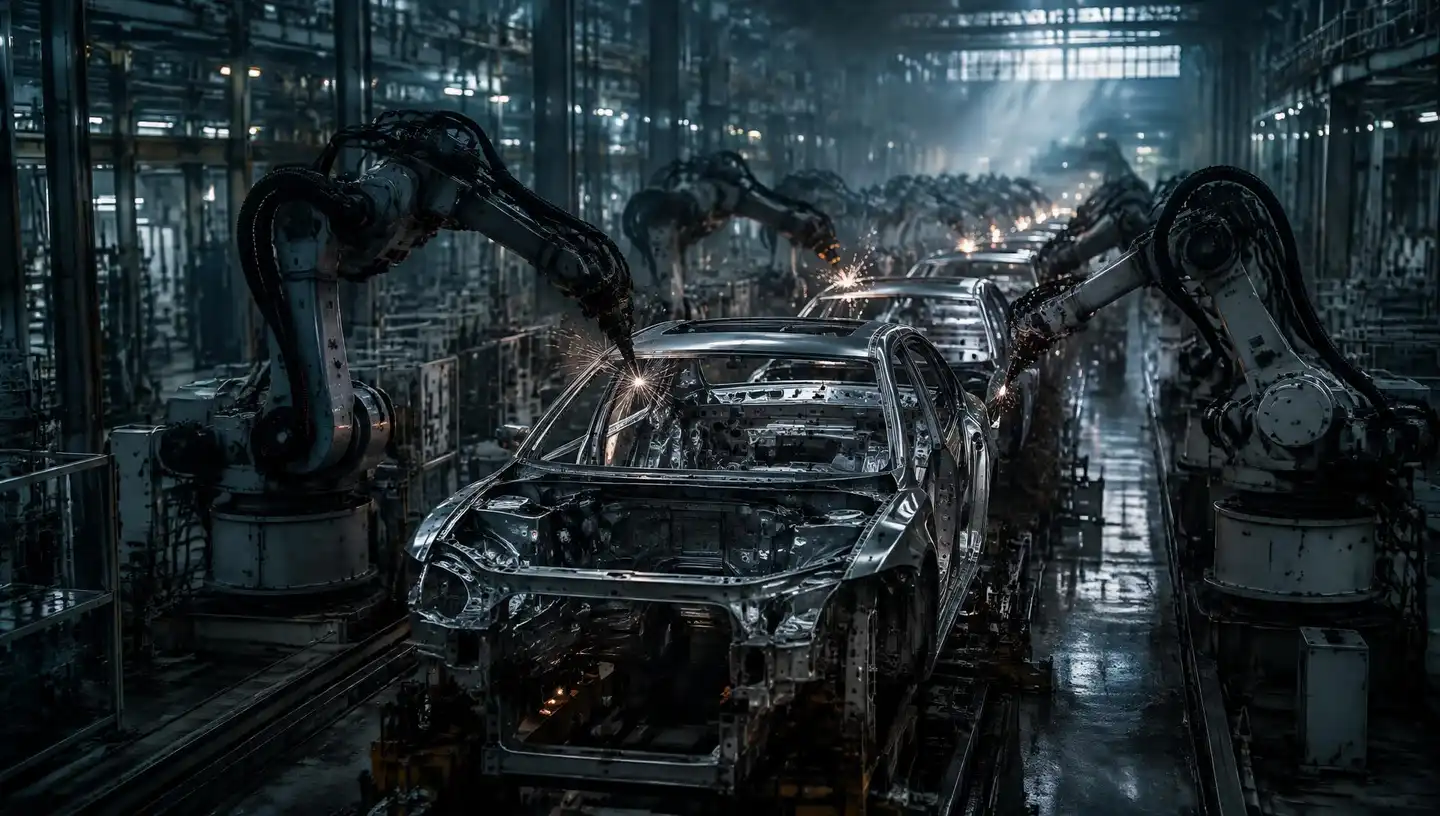
For a plant engineer scoping a line upgrade, an operations manager comparing control platforms or a buyer drafting a request for quotation (RFQ, a document asking suppliers to price a defined scope), the useful questions come in a set order: what the system layers are, which architecture fits the process, which safety and security sources apply, who builds the system and what shapes its cost. Each is covered in turn, without naming or ranking any vendor.
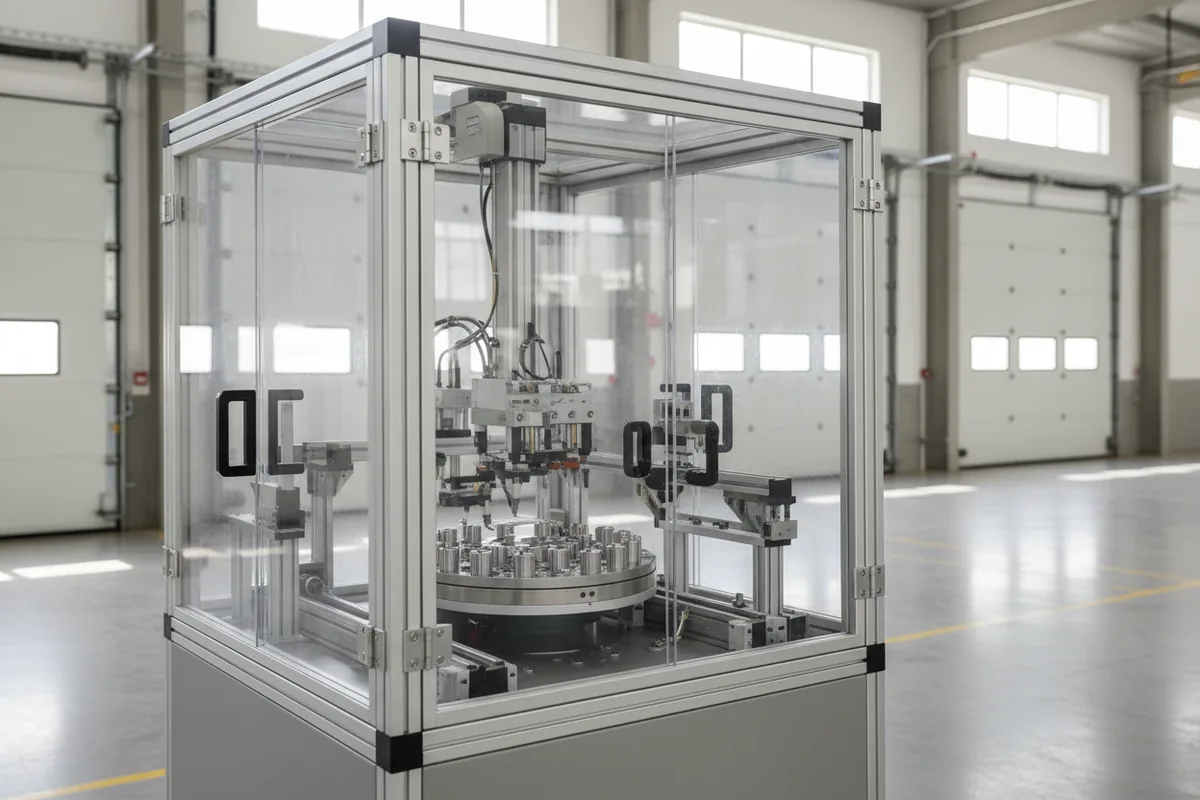
Industrial automation and controls is the use of control systems, such as programmable controllers, operator screens and supervisory software, to run machines and processes with less direct human handling. It links sensors on the plant floor to the logic that decides what each machine does, and to the software that tracks production for the business.
On this page
- Key Takeaways for Automation and Controls Buyers
- Which Operations and Facilities Industrial Automation and Controls Serves
- How Industrial Automation and Controls Systems Work
- Automation and Controls Options and How They Differ
- How to Evaluate an Industrial Automation and Controls Provider
- What Drives the Cost of an Industrial Automation and Controls Project
- When Industrial Automation and Controls Is Not the Right Fit
- Questions to Ask Before Issuing an RFQ for Automation and Controls
- Frequently asked questions
- Sources
Key Takeaways for Automation and Controls Buyers
- The term covers several layers. Field devices and sensors, control hardware (a PLC or DCS), supervisory software (SCADA and HMI) and higher-level business systems (MES and ERP) all form part of one automation and controls system.
- Architecture follows the process. Discrete, event-driven production and continuous process production tend toward different control architectures.
- Complexity has four main sources. Project scope, the infrastructure already in place, the integration required with existing systems and the plant's operational technology (OT) security posture shape a project's difficulty and cost.
- Federal safety rules apply to the machines. 29 C.F.R. § 1910.212 sets general machine guarding requirements for all machines.
- Security guidance exists for OT. NIST's SP 800-82 Rev. 3 addresses how to secure operational technology.
- Price lives in the proposal. A provider's written proposal or quote states the cost of a specific project.
Which Operations and Facilities Industrial Automation and Controls Serves
Automation and controls fit operations defined by their process rather than by their size alone. The profiles that line up with the technology include:
- Repetitive, high-volume production where the same sequence runs many times.
- Processes that depend on precise timing, temperature, pressure or other environmental control.
- Operations with documented hazards at manual work points, where a person currently stands at a point of operation.
- Plants where data collection and traceability are a regulatory or customer requirement.
The industries that use these systems span discrete manufacturing, process industries such as chemical, food and beverage and pharmaceutical production, automotive assembly, utilities, oil and gas, and warehousing and distribution. CISA's Industrial Control Systems page names the Energy, Water and Wastewater Systems, Transportation Systems, Critical Manufacturing, Food and Agriculture, Nuclear Reactors, Materials, and Waste, and Chemical sectors as places where industrial control systems and OT form the foundation of U.S. critical infrastructure.
The fit narrows at the other end. Very low-volume custom work and facilities without the electrical infrastructure or technical staff to commission and maintain a system sit outside the profile, for reasons set out under when automation is not the right fit.
How Industrial Automation and Controls Systems Work
CISA describes industrial control systems (ICS) and operational technology (OT) as the systems and devices that interact with the physical environment, on its Industrial Control Systems page. An automation system is usually described as a stack of layers, each passing information up and commands down.
Step 1: Field devices sense and act
Sensors measure position, level, temperature, flow or presence. Actuators, such as valves, motors and the drives that control motor speed, carry out physical changes. This layer is where the system touches the product.
Step 2: Controllers run the logic
A PLC (programmable logic controller) is a ruggedized industrial computer that runs in a repeating scan cycle: it reads its inputs, runs its stored logic against them and writes the results to its outputs, then repeats. A DCS (distributed control system) spreads control across many linked controllers that run a continuous process as one coordinated system.
Step 3: Operators supervise
An HMI (human-machine interface) is the screen or panel at the machine where an operator sees status and enters commands. SCADA (supervisory control and data acquisition) software collects data from field devices and controllers spread across a site or across sites, presents it to operators and lets them send supervisory commands remotely.
Step 4: Business systems plan and record
An MES (manufacturing execution system) tracks and directs production on the floor: work orders, materials, quality records and genealogy. An ERP (enterprise resource planning) system handles orders, inventory, purchasing and finance for the business as a whole.
Industrial networks carry data between these layers. How that network is laid out, segmented and connected to business systems affects both how the system performs and how exposed it is to cyber threats. Design and programming of each layer are the provider's engineering work and follow the equipment maker's documentation.
Automation and Controls Options and How They Differ
The choices in front of a buyer fall into a few groups: the controller architecture, the control strategy, the type of automation and the subsystems added to it.
| Option | How it works | Process fit |
|---|---|---|
| PLC-based control | Modular controllers running event-driven logic | Discrete machines, cells and lines |
| DCS | Integrated, distributed controllers coordinated as one system | Continuous processes across a large facility |
| Fixed (hard) automation | Equipment built for one sequence | High volume, little product variety |
| Programmable automation | Equipment reprogrammed between batches | Medium volume, product changes in batches |
| Flexible (soft) automation | Equipment that changes over with little lost time | Mixed products in varied volumes |
Control strategies describe how a loop decides what to do:
- Open-loop control sends a command without measuring the result, such as running a motor for a set interval.
- Closed-loop (feedback) control measures the output, compares it to a setpoint and corrects the difference.
- Feedforward control measures a disturbance before it affects the output and adjusts in advance.
- Cascade control nests one feedback loop inside another, with the outer loop setting the target for the inner one.
Robotics and machine vision are subsystems within a controlled cell. OSHA's Robotics page describes industrial robots as programmable multifunctional mechanical devices designed to move material, parts, tools or specialized devices through variable programmed motions, used for material handling, assembly, welding, machine tool load and unload, painting and spraying. A cobot (collaborative robot) is a robot designed to work alongside people in a shared workspace. Machine vision uses cameras and software to inspect, measure or guide.
For material movement, an AGV (automated guided vehicle) follows fixed paths, while an AMR (autonomous mobile robot) maps its surroundings and plans its own route. IIoT (Industrial Internet of Things) platforms collect machine data for analysis, and a digital twin is a software model of equipment or a process. Both are data and modeling layers that sit beside the control system rather than replacing it.
How to Evaluate an Industrial Automation and Controls Provider
Four kinds of provider appear in automation projects, and one project may involve more than one of them:
- OEM machine builders design and build a machine with its own controls.
- Systems integrators connect equipment, controllers and software from different sources into one working system, and some focus on PLC programming or SCADA work.
- Controls engineering firms design control systems, panels and documentation.
- Software platform vendors supply SCADA, HMI, MES or analytics software.
The criteria that separate one provider from another include:
- Experience in the plant's industry and process type, discrete or continuous.
- Familiarity with the control platform already running in the plant.
- The engineering documentation delivered, such as P&IDs (piping and instrumentation diagrams), electrical schematics and functional design specifications.
- Commissioning, the testing and startup of a system on site before handover, and who leads it.
- The support model after commissioning, including response arrangements and remote access terms set in the contract.
- The approach to OT security.
On security, NIST's SP 800-82 Rev. 3, Guide to Operational Technology (OT) Security, published in September 2023 and superseding Rev. 2, provides guidance on securing OT while addressing its performance, reliability and safety requirements, and recommends security countermeasures for common threats and vulnerabilities. It is voluntary guidance, not a regulation. A buyer can ask each provider how its designs draw on that guidance for network segmentation, access control and patch management. CISA's Industrial Control Systems page lists a fact sheet on how critical infrastructure operators can work with third-party ICS integrators to help put secure practices in place.
Outside crews bring an energy-control duty as well. Under 29 C.F.R. § 1910.147(f)(2), whenever outside servicing personnel work within that standard's scope, the on-site employer and the outside employer inform each other of their lockout or tagout procedures, and the on-site employer ensures its employees understand and comply with the restrictions and prohibitions of the outside employer's energy control program.
Cost comparison between providers is most useful on total cost of ownership (TCO): capital, integration, training, ongoing support and spare parts over the system's life, not the purchase price alone.
What Drives the Cost of an Industrial Automation and Controls Project
The scope of the system sets the base cost. The drivers that move it include:
- Scope of automation: the number of I/O points (each sensor input and actuator output wired to a controller) and the number of machines or process units.
- Control platform: the hardware and software family selected, and whether it matches what the plant already runs.
- Custom engineering: how much of the system is built to order versus standard product.
- Integration: the work needed to exchange data with existing MES, ERP or CMMS (computerized maintenance management system) software.
- Site conditions: electrical capacity, network readiness and physical access to the work area.
- Commissioning and startup: the testing, trial runs and on-site support required before handover.
- Support model: the ongoing service, spare parts and update arrangements after startup.
A greenfield installation in a new facility and a brownfield retrofit in an existing one carry different cost profiles. A retrofit adds the work of connecting to equipment already in place and of scheduling around production shutdowns, while a greenfield project builds infrastructure from the start.
OT security hardening, including network segmentation, firewalls and patch management processes, adds scope, and it is easy to leave out of an early RFQ. Writing it into the RFQ lets each provider price it in the same terms. The provider's written proposal or quote states the actual cost for a specific project.
When Industrial Automation and Controls Is Not the Right Fit
Some conditions make an automation project hard to justify, whatever the technology chosen:
- Very low or highly variable volume. Custom work with frequent changeovers can cost more to set up for each run than automation returns.
- Missing infrastructure or staff. A facility without the electrical capacity, network infrastructure or technical people to commission, operate and maintain a system carries that gap into every phase of the project.
- An unstable process. A process that is not yet stable or documented, once automated, repeats its variability faster rather than removing it.
- Heavy legacy integration. Older PLCs, proprietary communication protocols or unsupported software can require more engineering effort to connect than the automation returns.
In these cases, process documentation and standard work, targeted fixtures or a phased upgrade of the infrastructure may fit the operation in the meantime. For a plant reviewing its own line, the point of the list is whether these conditions describe the process, not whether automation is good or bad in general.
Questions to Ask Before Issuing an RFQ for Automation and Controls
The questions split three ways: those resolved inside the plant, those put to providers and those about safety. Each one is a question to raise, not a compliance checklist.
Internal questions
- Is the process stable and documented?
- What control platforms are already in use?
- Where are the integration points with MES, ERP or CMMS?
- What does the OT network architecture look like today?
- Who will own commissioning and ongoing support?
Provider questions
- What engineering documentation will be delivered at handover?
- What is the support model after commissioning?
- How does the provider approach OT network segmentation, in light of NIST's SP 800-82 Rev. 3 guidance?
- What is the spare parts and obsolescence plan for the control hardware specified?
Safety questions
Under 29 C.F.R. § 1910.212(a)(1), one or more methods of machine guarding shall be provided to protect the operator and other employees in the machine area from hazards such as those created by point of operation, ingoing nip points, rotating parts, flying chips and sparks; the regulation gives barrier guards, two-hand tripping devices and electronic safety devices as examples. Under 29 C.F.R. § 1910.212(a)(3)(ii), the point of operation of machines whose operation exposes an employee to injury shall be guarded. More broadly, 29 U.S.C. § 654 requires each employer to furnish employment and a place of employment free from recognized hazards that are causing or are likely to cause death or serious physical harm, and to comply with occupational safety and health standards. OSHA's Robotics page states that many robot accidents occur during non-routine operating conditions, such as programming, maintenance, testing, setup or adjustment, when a worker may be within the robot's working envelope, and that there are no specific OSHA standards for the robotics industry.
- How does the guarding design address point-of-operation hazards under 29 C.F.R. § 1910.212?
- How does the safety design handle programming, maintenance, testing, setup and adjustment, the non-routine conditions OSHA's Robotics page identifies?
How a rule applies to a given machine is a question for OSHA, a qualified engineer and the equipment maker. A common next step is to gather the plant's current electrical drawings, network diagram and controller inventory, and to ask each prospective provider for a sample of its engineering documentation and a reference site in the same industry and process type.
Independent referral
Your next project deserves a clearer starting point.
Describe your requirements. Where there is a fit, we may introduce you to relevant providers.
Industrial Technology Exchange
How the independent referral process works
- DescribeSubmit a short inquiry describing your project, facility and timeline.
- ReviewWe review the inquiry for clarity and fit. Incomplete or out-of-scope requests may not be referred.
- ConnectWith your consent, relevant third-party providers may contact you. You decide whether to engage.
Testimonials
Frequently asked questions
What are the main components of an industrial automation system?
The main components are field devices (sensors, actuators and drives), control hardware (a PLC or DCS), supervisory software (SCADA and HMI) and higher-level systems (MES and ERP). Field devices sense and act, controllers run the logic, supervisory software shows status and takes operator commands, and business systems plan and record production.
What are the four types of control systems?
The four are open-loop, closed-loop, feedforward and cascade. Open-loop sends a command without measuring the result. Closed-loop measures the output and corrects toward a setpoint. Feedforward adjusts for a measured disturbance before it reaches the output. Cascade nests one feedback loop inside another.
What is the difference between a PLC and a DCS?
A PLC suits discrete, event-driven control of individual machines or lines and is modular. A DCS suits continuous process control across a large facility, with many controllers coordinated as one integrated system. The difference is the type of process, not the brand.
What is SCADA and how does it fit into an automation system?
SCADA collects data from field devices and controllers spread across a site, presents it to operators and lets them send supervisory commands. It sits above the PLC or DCS layer and below MES. CISA describes industrial control systems and OT as the systems and devices that interact with the physical environment.
What cybersecurity risks apply to industrial control systems?
NIST's SP 800-82 Rev. 3 identifies common threats and vulnerabilities to OT systems and recommends countermeasures. CISA's Industrial Control Systems page lists an advisory warning of threat actors targeting a family of PLCs and guidance on reducing public internet exposure of control systems. No single practice removes the risk.
What safety requirements apply to automated machinery?
29 C.F.R. § 1910.212 requires one or more methods of machine guarding to protect the operator and other employees from hazards such as point of operation, ingoing nip points, rotating parts, flying chips and sparks. OSHA's Robotics page links many robot accidents to non-routine conditions such as programming, maintenance, testing, setup or adjustment.
What is the difference between a cobot and an industrial robot?
A cobot is designed to work alongside people in a shared workspace, while a conventional industrial robot is generally run in a guarded cell apart from workers. OSHA's Robotics page notes that during non-routine operations a worker may be within a robot's working envelope, where unintended operations could cause injuries.
What is OT security and why does it matter for manufacturers?
OT security covers the practices and controls that protect PLCs, SCADA, HMIs and field networks from cyber threats. NIST's SP 800-82 Rev. 3 addresses OT's performance, reliability and safety requirements because these systems detect or cause direct changes in the physical environment, so an attack can affect production, not only data.
How does a buyer evaluate a systems integrator for an automation project?
The criteria are experience in the buyer's industry and process type, familiarity with the control platform in use, the engineering documentation delivered, commissioning and startup support, the support model after commissioning and the approach to OT network security. These are comparison points, not a ranking.
What is total cost of ownership for an automation project?
TCO covers capital equipment, engineering and integration, installation and commissioning, operator and maintenance training, support contracts, spare parts and eventual obsolescence management, over the system's life rather than at purchase alone.