
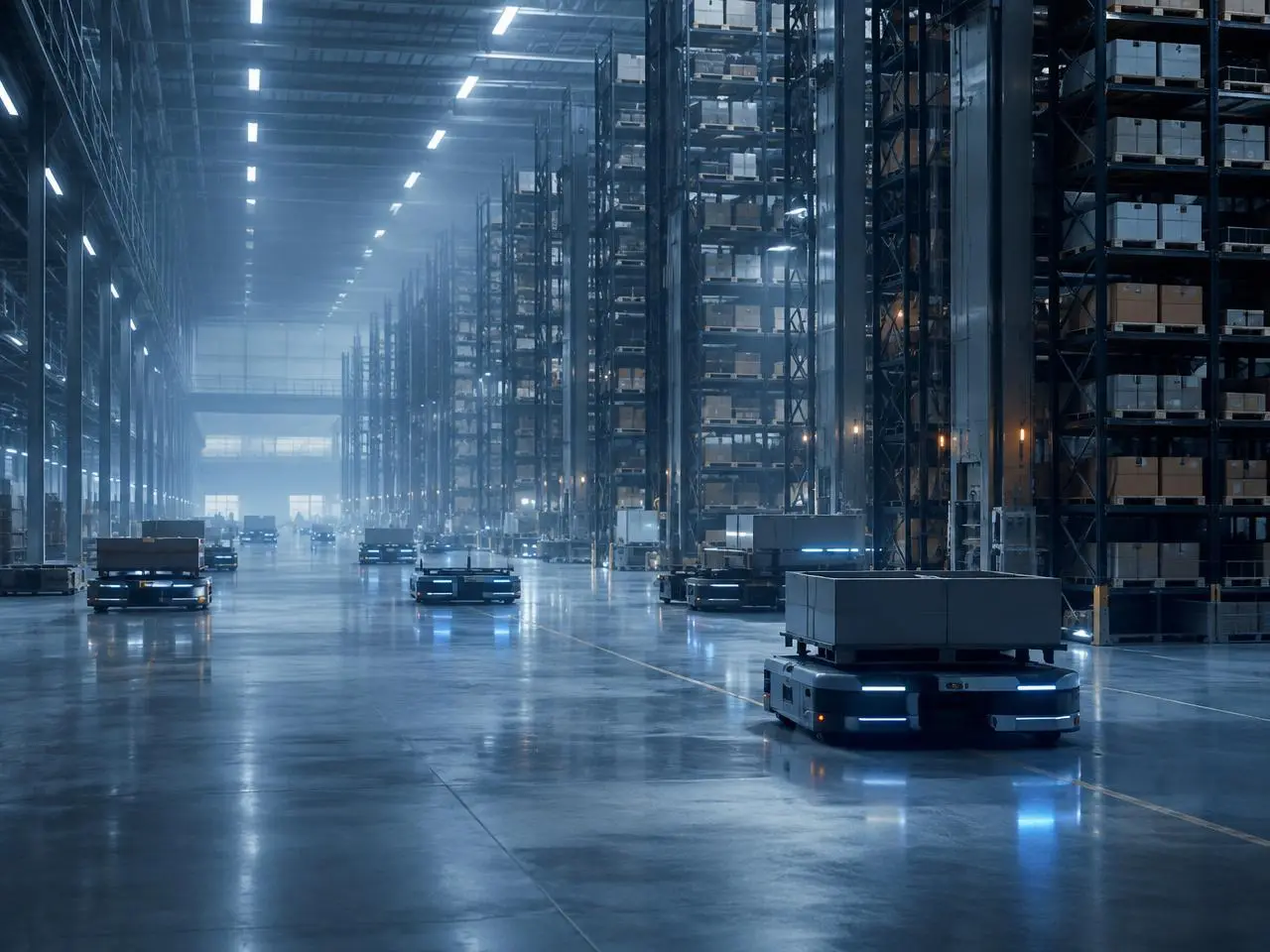
You may be a plant engineer scoping an automated storage project, an operations manager reviewing a capital request, or a procurement lead drafting an RFQ. In each case, the hard part is comparing integrators whose proposals start from different assumptions. What follows covers how these projects are structured, how the main system types differ, what shapes the cost, and the questions that make proposals comparable.
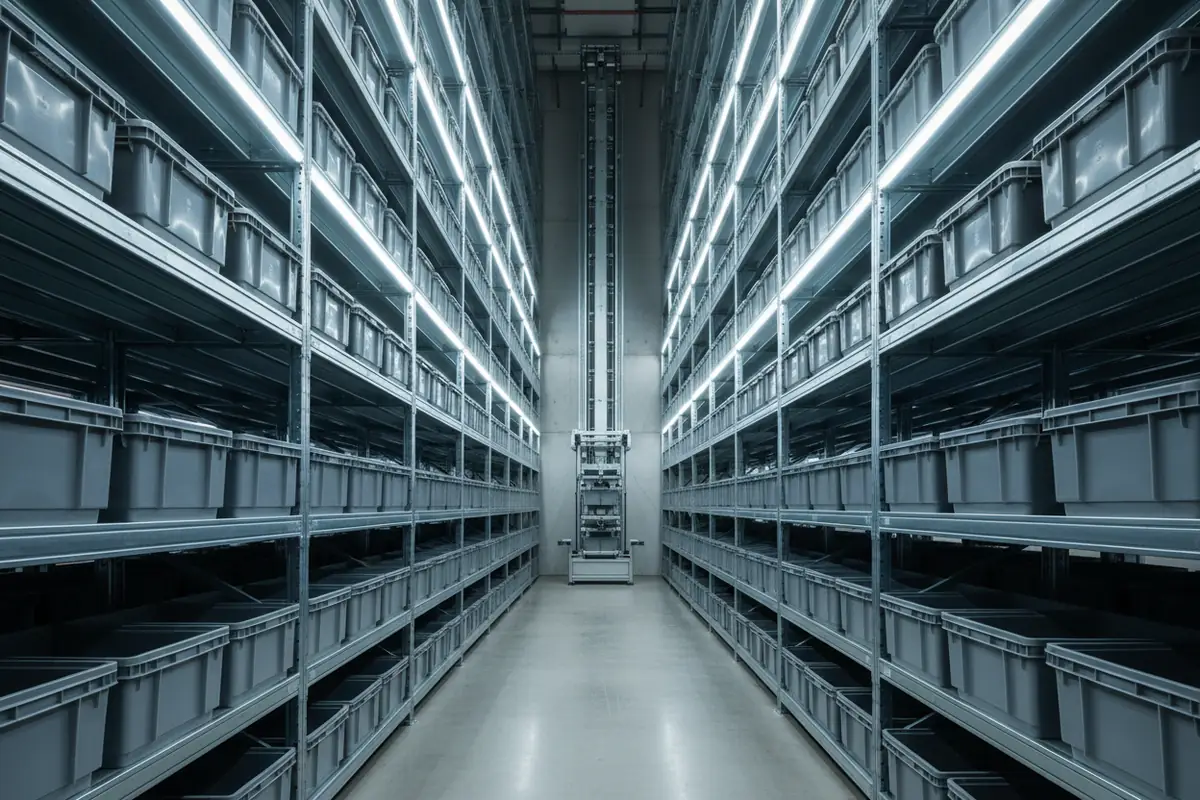
An ASRS system integrator is the firm that turns automated storage and retrieval equipment into a working system inside your facility. It assesses the site, designs the system, sources the hardware, installs it, connects it to your controls and software, and tests the whole system before handoff. The manufacturer builds the machines. The integrator makes them work in your building.
On this page
- Key Facts About ASRS System Integration
- Facilities and Operations Where ASRS Integration Fits
- How an ASRS Integration Project Works
- ASRS System Types and How They Differ
- How to Evaluate an ASRS System Integrator
- What Drives the Cost of an ASRS Integration Project
- When ASRS Integration Is Not the Right Direction
- Questions to Ask Before Selecting an ASRS Integrator
- Frequently asked questions
- Sources
Key Facts About ASRS System Integration
An automated storage and retrieval system (ASRS) is material handling equipment that stores loads and brings them back on command. The loads can be pallets, totes, cartons or individual items. Software controls the machines, so people do not have to travel to a storage location to put an item away or pick it.
A system integrator selects, combines, installs and commissions the ASRS hardware, the controls software and the surrounding material handling equipment. The result is one working system in an existing or new facility. The original equipment manufacturer (OEM) designs and builds the storage machines. An integrator may be authorized by one OEM to sell and install its equipment, may work independently across several OEM lines, or may do both. That relationship affects which equipment a proposal includes and who stands behind it.
An integrator usually connects these controls and software layers:
- PLC (programmable logic controller): the industrial computer that runs the machine's motions and safety logic.
- HMI (human-machine interface): the screen or panel operators use to monitor and command the equipment.
- WCS (warehouse control system): the software layer that directs the hardware.
- WMS (warehouse management system): the inventory and order layer above the WCS.
- ERP (enterprise resource planning): the business system that holds purchasing, production and financial records.
Key takeaways:
- The integrator's job is the working system, not only the machine.
- Project scope, facility conditions, system type and integration complexity are the main variables that shape what an integrator delivers.
- Controls and software integration is often where proposals differ most.
- Federal machine guarding and hazardous energy rules apply to the equipment, and the employer carries those duties.
- The integrator's written proposal states the cost of a defined scope.
Facilities and Operations Where ASRS Integration Fits
ASRS integration tends to suit operations where storage and picking have become the constraint. Signs of that include a high SKU count (SKU, or stock-keeping unit, meaning each distinct item tracked in inventory), throughput requirements that manual picking struggles to keep up with, floor space that cannot expand, labor cost pressure, and accuracy requirements that manual processes cannot meet consistently.
Industries that may consider ASRS include manufacturing, distribution and fulfillment, pharmaceutical and medical device, food and beverage, automotive parts, and e-commerce. Within manufacturing, applications range from storing raw materials and work-in-process to buffering finished goods before shipment.
The building matters as much as the operation. During scoping, an integrator assesses these facility factors:
- Ceiling height: sets how much vertical storage the building can hold.
- Floor load rating: determines whether the slab can carry the system's weight or needs reinforcement.
- Existing racking or conveyor infrastructure: affects whether the new system replaces, reuses or connects to it.
- Available power: shows whether the electrical service supports the new equipment.
The software already in place shapes the project too. A facility running an established WMS or ERP needs the ASRS to exchange data with those systems, and the number and age of those systems affect integration scope and complexity. A facility with no WMS may need one specified as part of the project. Either way, your current systems list becomes part of the scope conversation from the first site visit.
How an ASRS Integration Project Works
An ASRS integration engagement moves through a sequence of phases, each with its own deliverables. Phase names differ between integrators, and some phases overlap.
Step 1: Site and process assessment
The integrator studies the building, the inventory profile, order patterns and current workflows. The output describes what the system has to do and what the facility allows.
Step 2: System design and engineering
Engineers select the system type, lay out the equipment, and define how loads enter and leave the system. The controls architecture is set out at this stage as well.
Step 3: Equipment procurement and staging
The integrator orders hardware from the OEM and other suppliers. Equipment is often staged and checked before it reaches the site.
Step 4: Installation
Crews assemble structures, place machines and run power and communications. Machine guarding is planned and fitted as part of this work.
Step 5: Controls programming and software integration
This is a distinct workstream. The integrator connects the ASRS hardware to the PLC, WCS, WMS and ERP so that orders, inventory records and machine movements stay in step. Integrator capability varies widely here, so it deserves close attention during evaluation.
Step 6: Testing and commissioning
Commissioning is the phase in which the integrated system is tested under operating conditions, with real loads and live software connections, before the buyer accepts it. Acceptance criteria written into the contract define when commissioning is complete.
Step 7: Operator training and ongoing support
Operators and maintenance staff are trained on the system. A support agreement then covers service after handoff.
Safety runs through installation and commissioning. OSHA's Warehousing page lists potential warehousing hazards, including those associated with powered industrial trucks, ergonomics, material handling, hazardous chemicals, slip/trip/falls and robotics. The same page states that inspections under OSHA's updated National Emphasis Program on Warehousing and Distribution Center Operations began July 31, 2026.
Under 29 U.S.C. § 654, each employer must furnish employment and a place of employment free from recognized hazards that are causing or are likely to cause death or serious physical harm, and must comply with occupational safety and health standards. Under 29 C.F.R. § 1910.212, one or more methods of machine guarding must be provided to protect the operator and other employees in the machine area from hazards such as those created by point of operation, ingoing nip points, rotating parts, flying chips and sparks. Under 29 C.F.R. § 1910.147, the employer must establish a program of energy control procedures, employee training and periodic inspections. Before any employee services or maintains a machine where unexpected energizing, start-up or release of stored energy could cause injury, the machine must be isolated from the energy source and rendered inoperative. The equipment maker and OSHA settle how these rules apply to a particular installation.
ASRS System Types and How They Differ
The main difference between system types is the size of the load each one handles, and that decides most of what follows. Many systems combine more than one type.
| System type | Load handled | Storage characteristic | Operational scenario it suits |
|---|---|---|---|
| Unit-load AS/RS | Pallets and other large loads | Tall, dense racking served by cranes in narrow aisles | Bulk storage of full pallets, such as raw materials or finished goods |
| Mini-load AS/RS | Totes, trays or cartons | Racking with smaller-load cranes or handlers | Storing and retrieving many smaller items or parts |
| Vertical lift module (VLM) | Trays of small to medium items | Enclosed vertical storage with an extractor that brings trays to an access opening | Parts, tools and small-item storage with limited floor space |
| Vertical carousel module | Carriers or shelves of small items | Shelves rotate vertically within an enclosure | Small-item storage presented at a fixed work height |
| Horizontal carousel | Bins of small to medium items | Bins rotate horizontally on a track | Picking from many bins in a long, low footprint |
| Shuttle system | Totes or cartons | Multi-level shuttles operating within racking, often one per level | High-volume tote handling across many storage locations |
| Goods-to-person (GTP) system | Totes, trays or bins | Storage of varying designs that delivers items to a fixed pick station | Order picking where travel to storage is removed from the operator's job |
Conveyors are often integrated alongside an ASRS to move loads to and from it, but conveyor work is usually a separate scope item in the proposal, sometimes delivered by a different firm.
Mobile robots can also link the storage system to the rest of the operation. An AMR (autonomous mobile robot) moves loads by navigating with its own sensors and maps. An AGV (automated guided vehicle) follows fixed paths such as floor markers or wires. Either may carry loads between the ASRS and pick or pack stations, and each adds its own scope, controls interface and safety review. The system type you choose shapes the rest of the project, from the integrators who can deliver it to the floor preparation it requires.
How to Evaluate an ASRS System Integrator
Integrators are compared on capability, accountability and support, and the evidence for each comes from documents rather than presentations. These criteria give a neutral basis for comparison:
- Experience with the system type: delivering a unit-load crane system draws on different engineering than delivering a VLM or shuttle project.
- Controls and software integration capability: this covers the PLC platforms the integrator programs, the WCS it uses or develops, and the WMS and ERP interfaces it has built.
- In-house engineering versus subcontracted installation: this shows who does the work and where responsibility sits when a problem appears.
- References: these come from facilities with similar throughput profiles, industries or system types.
- Post-commissioning support model: this covers what the support agreement includes and its response terms.
- Project management approach: this shows whether one person or entity holds accountability across design, installation and software.
OEM relationships deserve their own line in the evaluation. An OEM-authorized integrator and an independent integrator may source equipment differently, carry different warranty terms, and route support requests through different paths. An RFQ can ask each integrator to state its OEM relationships and what they cover.
Two documents structure the comparison. An RFQ (request for quotation) asks integrators to price a defined scope. An RFP (request for proposal) asks them to propose a solution and its price for a stated need. Buyers who have not fixed the system type often start with an RFP.
Total cost of ownership (TCO) is the full cost of a system over its working life. For an ASRS, it includes capital equipment and installation along with ongoing maintenance, software licensing, spare parts and support contracts. Asking each integrator to price these items separately keeps proposals comparable.
A site walk and process assessment by the integrator would produce three documents: a documented scope, a system design concept, and a basis-of-design document. The basis-of-design document records the assumptions the design rests on, such as load sizes, inventory counts and order volumes. When every proposal rests on a written basis of design, differences in price can be traced to differences in assumptions.
What Drives the Cost of an ASRS Integration Project
Each ASRS project is priced from its own scope, so cost is most clearly understood through the factors that move it:
- System type and scale: the number of aisles, the number of storage locations and the load size.
- Degree of custom engineering: standard configurations require less design work than layouts built around unusual loads or buildings.
- Controls and software integration complexity: cost rises with the number of systems to interface and with custom WCS development compared with off-the-shelf software.
- Site conditions: floor preparation, structural work and power infrastructure.
- Installation labor and commissioning duration: the crew size and the length of on-site testing.
- Post-commissioning support and maintenance terms: coverage levels, response terms and spare parts arrangements.
A phased implementation changes the shape of the cost. Starting with one aisle or one zone can lower the initial capital commitment, and it can also affect integration complexity, because later phases have to connect to a system already in operation. Proposals can be read for how each phase is scoped and priced, and for whether later phases are committed or optional.
The integrator's written proposal is where cost is stated. A complete proposal sets out the scope, the equipment bill of materials, the controls and software scope, the installation scope, and the payment and warranty terms. Where two proposals differ sharply in price, comparing those sections line by line usually shows the cause, such as an excluded floor repair, a different software approach or a shorter support term.
When ASRS Integration Is Not the Right Direction
An automated storage system is not always the answer to a storage problem. The match tends to be weak under these conditions:
- Very low SKU count with simple, predictable storage needs: conventional storage may already handle the work.
- Insufficient ceiling height or floor load capacity that cannot be modified: the building cannot host the system.
- Highly variable or unpredictable load sizes: no single ASRS type handles a wide spread of load sizes well.
- No IT infrastructure or internal capability to support ongoing WCS and WMS integration: the system depends on that software being maintained after handoff.
- Capital or an integration schedule the organization cannot accommodate: the project cannot be funded or staffed through to commissioning.
Other approaches exist for operations like these. Conventional racking, pick-to-light (lights at each location that signal the picker which item and quantity to take), or a conveyor-only layout may suit some operations, and each carries its own trade-offs in labor, space and flexibility.
A sound proposal addresses fit as well as capability. A proposal that describes the system without addressing the facility's known constraints, such as a low roof, a weak slab or an aging WMS, leaves a gap the buyer can raise with the integrator, asking how each constraint is resolved and at what point in the project. An honest assessment of fit is also one way to compare integrators: it shows which ones studied your operation and which ones proposed a standard system.
Questions to Ask Before Selecting an ASRS Integrator
A buyer's RFQ and evaluation process usually puts the same set of questions to each integrator. These are questions that bring out the differences discussed in evaluation:
- Which ASRS types and OEM lines does the integrator design and install, and what are its OEM authorization terms?
- What PLC platforms, WCS products, and ERP or WMS interfaces has the integrator implemented in the past three years?
- Who performs installation, in-house crews or subcontractors, and how is subcontractor work managed and warranted?
- What does the post-commissioning support contract cover, and what are its response and escalation terms?
- Can the integrator provide references from facilities with a similar system type, industry and throughput profile?
- How does the integrator handle scope changes discovered during installation?
- What safety review and machine guarding documentation does the integrator provide at project close?
Putting the same questions to every integrator from the same RFQ baseline makes the answers comparable, because each response addresses the same facility and the same requirements. Answers given in writing can also be carried into the contract.
A practical next step is gathering your existing facility drawings, current inventory and throughput data, and a list of the software systems already in place. With that baseline, each integrator you assess scopes the project from the same information.
Independent referral
Your next project deserves a clearer starting point.
Describe your requirements. Where there is a fit, we may introduce you to relevant providers.
Industrial Technology Exchange
How the independent referral process works
- DescribeSubmit a short inquiry describing your project, facility and timeline.
- ReviewWe review the inquiry for clarity and fit. Incomplete or out-of-scope requests may not be referred.
- ConnectWith your consent, relevant third-party providers may contact you. You decide whether to engage.
Testimonials
Frequently asked questions
What is ASRS equipment?
ASRS equipment is automated storage and retrieval machinery that stores and returns pallets, totes, cartons or individual items on command. The main hardware types include unit-load crane systems, mini-load systems, vertical lift modules and shuttles. A software layer, the WCS and often a WMS above it, directs the hardware.
What does an ASRS system integrator do?
An ASRS system integrator designs, procures, installs and commissions an automated storage and retrieval system within a facility. It connects the hardware to the facility's PLC, WCS, WMS and ERP. The OEM builds the machines, while the integrator delivers the working system. Scope varies from project to project.
What are some examples of system integrators?
ASRS integration work is done by three kinds of firms. OEM-authorized integrators sell and install one manufacturer's equipment. Independent integrators work with several OEM lines. Larger material handling engineering firms include ASRS as part of a broader warehouse automation scope.
How much does an automated storage and retrieval system cost?
A price for an automated storage and retrieval system comes from a written proposal for a defined scope rather than from a published figure. The upfront price is also only part of the picture: total cost of ownership adds maintenance, software licensing, spare parts and support contracts over the system's working life. A phased project can spread the capital commitment across stages.
Who performs ASRS integration in the United States?
ASRS integration in the United States is performed by OEM-authorized integrators, independent integrators, and material handling or warehouse automation engineering firms. Some focus on particular industries or system types. Asking about system-type experience and references shows where each firm's focus lies.
What is the difference between a WCS and a WMS in an ASRS project?
A WCS directs hardware movements within the ASRS as they happen. A WMS sits above it and manages inventory, locations and orders. An ASRS integrator usually connects both layers, and the interface among the WCS, WMS and ERP is a key integration workstream.
What safety standards apply to ASRS installations?
29 C.F.R. § 1910.212 requires machine guarding to protect operators and others in the machine area. 29 C.F.R. § 1910.147 requires an energy control program before servicing or maintenance where unexpected start-up or stored energy could injure employees. OSHA's Warehousing page lists robotics among warehousing hazards. Integrators can be asked for safety review and guarding documentation at project close.
How do I evaluate ASRS system integrators before issuing an RFQ?
Much of the evaluation happens before any integrator is contacted. Preparing facility drawings, inventory and throughput data, and a list of existing software systems sets a shared baseline. Deciding between an RFQ, for a defined scope, and an RFP, for an open need, sets how integrators respond. Written answers to the same questions can then be compared and carried into the contract.