
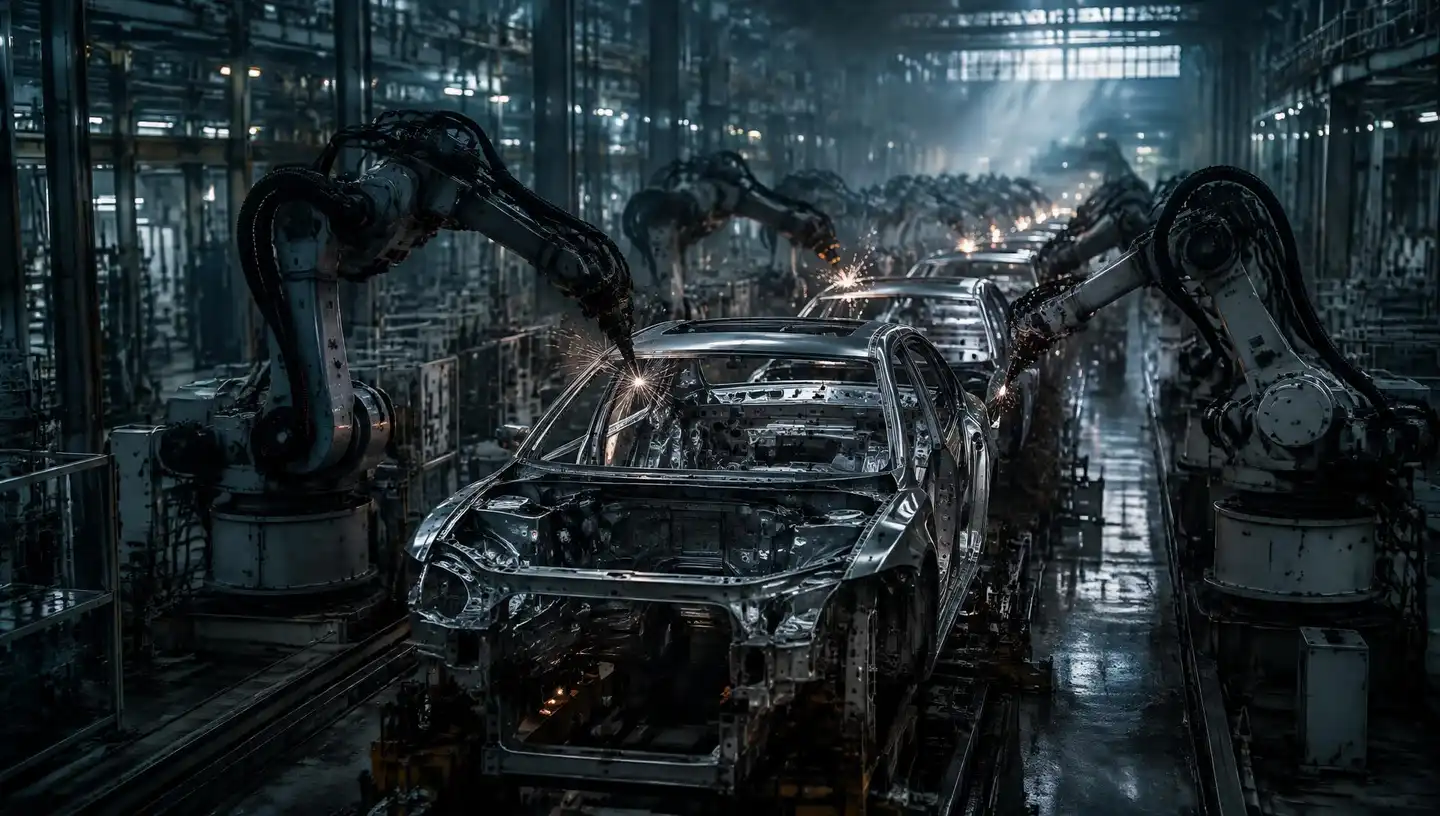
A plant engineer, operations manager or procurement lead scoping a machine purchase carries several open questions at once: whether a catalog machine can do the job, how far the new equipment must talk to the controls and software already on the floor, and what a supplier's proposal leaves out. The sequence that answers those questions starts with the process itself, not with a supplier list, and the comparison points are the same whichever path a project takes.
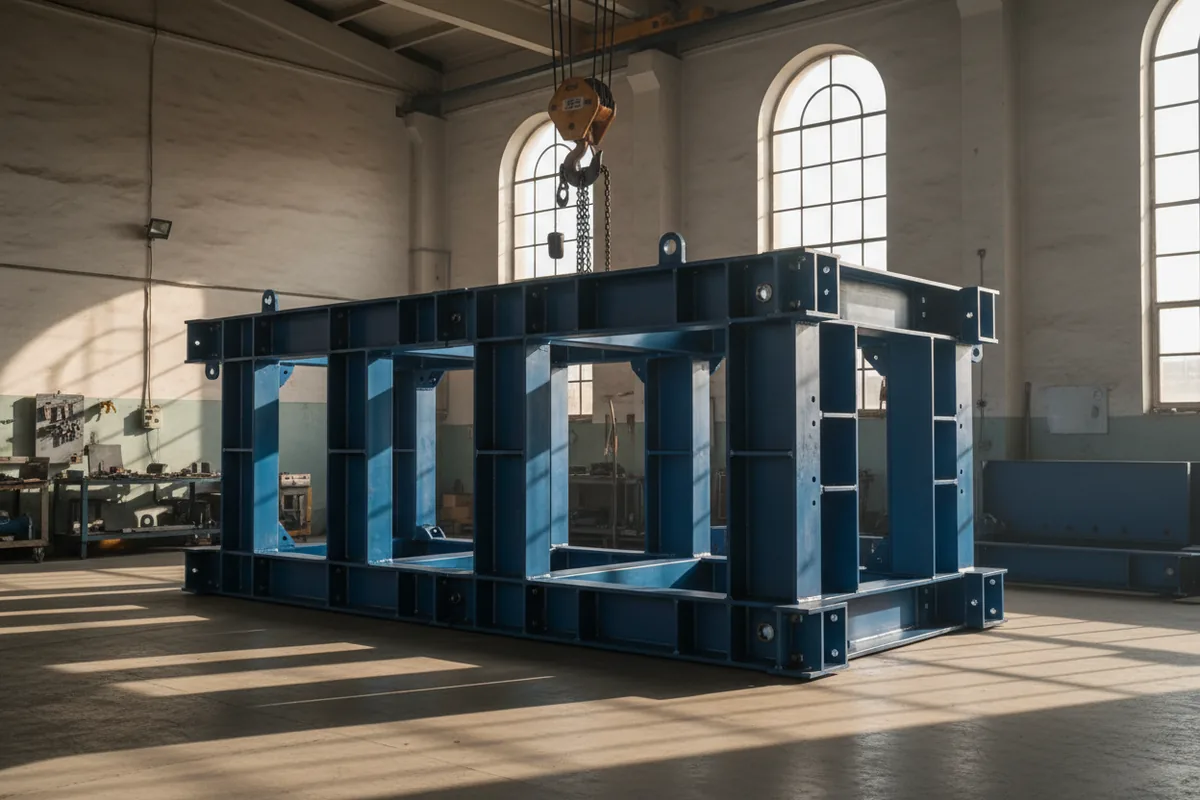
Industrial equipment is the machines, tools and systems a plant uses to make, process or move product, bought as a standard catalog model, a modified standard model or a fully custom build. Custom machinery is designed around one process or part. The right path follows from documented requirements, integration needs, safety documentation and total cost of ownership.
On this page
- Key Takeaways for Equipment Buyers
- Which Operations and Buyers Industrial Equipment and Custom Machinery Decisions Fit
- How Industrial Equipment Procurement Works, Stage by Stage
- Standard, Modified-Standard and Custom: How the Equipment Options Differ
- How to Evaluate an Industrial Equipment or Custom Machinery Supplier
- What Drives the Price of Industrial Equipment and Custom Machinery
- When Industrial Equipment or Custom Machinery Is Not the Right Path
- Questions to Raise Before Issuing an RFQ for Industrial Equipment
- Frequently asked questions
- Sources
Key Takeaways for Equipment Buyers
- Industrial equipment is the broad category: standard and semi-standard machines, tools and systems used in manufacturing, processing and material handling.
- Custom machinery is purpose-built or modified equipment designed around a specific process, part geometry, throughput requirement or integration constraint, as distinct from catalog equipment sold to a published specification.
- The path matters. Choosing standard, modified-standard or fully custom equipment affects lead time, total cost of ownership (TCO), integration complexity and how long support remains available.
- Machine guarding is a federal baseline. Under 29 C.F.R. § 1910.212, one or more methods of machine guarding must be provided to protect the operator and other employees in the machine area from hazards such as those created by point of operation, ingoing nip points, rotating parts, flying chips and sparks. The regulation gives barrier guards, two-hand tripping devices and electronic safety devices as examples, and it requires machines designed for a fixed location to be securely anchored to prevent walking or moving.
- The employer's general duty. Under 29 U.S.C. § 654(a)(1), the General Duty Clause, each employer must furnish to each of its employees employment and a place of employment free from recognized hazards that are causing or are likely to cause death or serious physical harm to its employees, and under the separate duty in 29 U.S.C. § 654(a)(2), must comply with occupational safety and health standards promulgated under that chapter.
Which Operations and Buyers Industrial Equipment and Custom Machinery Decisions Fit
Discrete and process manufacturers, fabricators, assembly operations, food and beverage processors, automotive and aerospace suppliers, packaging lines and material handling operations all buy equipment along the same three paths. The decision usually sits with a plant engineer, an operations or manufacturing manager, an automation or controls engineer, or a procurement or sourcing lead, and larger projects tend to involve several of them.
Typical triggers include:
- capacity expansion on an existing product;
- replacement of a line or a machine at the end of its service life;
- a new product introduction with a new part geometry or material;
- automation of a manual process;
- integration with existing control and plant systems.
Those systems carry their own terms. A PLC (programmable logic controller) is the industrial computer that runs a machine's logic. An HMI (human-machine interface) is the screen or panel an operator uses. SCADA (supervisory control and data acquisition) monitors and controls equipment across an area or site. MES (manufacturing execution system) tracks production orders and work on the floor. ERP (enterprise resource planning) is the business system for orders, inventory and finance.
The fit is weaker for a facility with no defined process requirement, a buyer who has not yet documented cycle time, throughput or part-geometry requirements, or an operation that has not yet ruled out a standard catalog machine. In each case the purchase question comes before the supplier question.
How Industrial Equipment Procurement Works, Stage by Stage
Step 1: Document the requirements
The requirements set describes process parameters, throughput targets, part geometry and material, and the integration points with the PLC, HMI, SCADA, MES and ERP systems in place. It also records site constraints: floor space, utilities and environmental conditions. Integration with existing controls and with plant software, including a CMMS (computerized maintenance management system, which schedules and records maintenance work), is a scope item to define at this stage, before any request goes to a supplier.
Step 2: Survey the market and identify suppliers
The survey covers three routes in parallel: standard catalog machines, modified-standard options built on a catalog platform, and suppliers able to quote a custom build. The output is a short list of suppliers whose documented work matches the process.
Step 3: Issue an RFQ or an RFP
An RFQ (request for quotation) asks suppliers for a price against a defined specification. An RFP (request for proposal) invites suppliers to propose a solution to a stated problem. A catalog purchase tends toward an RFQ; a process with open design questions tends toward an RFP.
Step 4: Evaluate the proposals
Proposals are compared on technical compliance with the specification, safety documentation, the integration plan, commissioning scope, spare-parts availability and warranty terms. A proposal that omits one of these is not comparable to one that includes it.
Step 5: Run the factory and site acceptance tests
A factory acceptance test (FAT) is a structured test at the supplier's facility, before shipment, that checks the machine against the agreed specification. A site acceptance test (SAT) repeats that check after the machine is installed in the buyer's plant.
Step 6: Commission and hand over
Commissioning is the process of confirming that installed equipment performs to specification before production use. Where outside personnel service equipment covered by the federal lockout/tagout standard, 29 C.F.R. § 1910.147(f)(2) requires the on-site employer and the outside employer to inform each other of their respective lockout or tagout procedures, and the on-site employer must ensure its employees understand and comply with the restrictions and prohibitions of the outside employer's energy control program.
Standard, Modified-Standard and Custom: How the Equipment Options Differ
The three paths trade engineering effort against fit. Standard equipment asks the process to adapt to the machine; custom machinery adapts the machine to the process; modified-standard sits between them. Turnkey lines, where one supplier delivers a complete production line, are a related category beyond a single machine.
| Criterion | Standard (catalog) | Modified-standard | Fully custom |
|---|---|---|---|
| Specification | Defined and published | Catalog platform with engineering changes | Built to the buyer's specification |
| Lead time | Shorter | Between standard and custom | Longer |
| Engineering cost | Lower | Added for the changes | Higher |
| Spare parts | Catalog parts available | Catalog parts plus modified items | Parts specific to the build |
| Support model | Supplier's standard support | Standard warranty and support may be modified | Defined in the contract |
| Integration complexity | Set by the machine's standard interfaces | Adjusted to the buyer's systems | Greater |
| Fits when | The process can adapt to the machine | A catalog platform nearly fits | No catalog or modified option meets the requirement |
Safety documentation and long-term serviceability cut across all three. Two marks buyers ask about are CE marking and UL listing: each is a mark indicating that a product was assessed against a defined set of product-safety requirements, and the framework or organization behind each mark states what it requires. For serviceability, the comparison point is whether drawings, a bill of materials (BOM) and parts remain obtainable over the machine's working life.
How to Evaluate an Industrial Equipment or Custom Machinery Supplier
Evaluation is most reliable against criteria fixed before the proposals arrive, so each supplier is measured the same way. For a buyer weighing several proposals that each describe the same machine in different terms, a common set of questions is what turns a stack of documents into a comparison, and it also surfaces early which supplier has left a scope item unaddressed.
- Technical capability. Check whether the supplier's documented work covers the process type, material, throughput range and integration environment the project requires.
- Safety documentation. Ask for a risk assessment and guarding documentation showing how the design addresses the hazards named in 29 C.F.R. § 1910.212. OSHA's Machine Guarding page states that any machine part, function or process that may cause injury must be safeguarded.
- Integration plan. Look for a documented interface to each control and plant system named in the requirements set, and a named party responsible for integration testing.
- FAT scope. Ask what the supplier tests at its facility and what documentation the buyer receives afterward.
- Spare parts and service. Ask for the parts stocking policy, the service response model and the documentation package: drawings, BOM and maintenance manual.
- References and installed base. Ask whether the supplier has built or supplied equipment for the same process type and production environment.
- Contract terms. Confirm who owns the design, the warranty conditions and what the commissioning scope includes.
- Control system security. OT security (operational technology security) protects the controls and networks that run physical equipment. NIST publishes voluntary guidance on industrial control system security, and a buyer can ask whether a supplier's controls design references it.
Whether a given guarding method is adequate for a particular installation is settled by the employer's own safety review and the equipment maker's documentation, read against the OSHA standards that apply.
What Drives the Price of Industrial Equipment and Custom Machinery
Cost follows scope, and each driver appears as a line item in a written proposal.
- Scope and complexity. The number of axes, the process steps combined in one machine, the materials handled and the throughput requirement all shape engineering and build cost.
- Integration depth. Every connection to controls or plant software adds engineering and commissioning work, so a machine that must exchange data with several systems costs more to deliver than one that runs on its own.
- Safety documentation. CE marking, UL listing or a third-party risk assessment, in which an outside party reviews the machine's hazards and safeguards, adds engineering time.
- Custom tooling and fixturing. Purpose-built tooling for a specific part geometry adds to build cost and lead time.
- Spare parts and documentation. A full spare-parts package and documentation set (drawings, BOM, maintenance manual, training materials) are contract line items.
- Commissioning and training. On-site commissioning, operator training and a production-readiness sign-off are scope items that change the total.
Total cost of ownership (TCO) is the sum of acquisition cost, installation and commissioning, integration, training, spare parts, maintenance and end-of-life disposition, not purchase price alone. The supplier's written proposal or quote states the figures and which scope items they include; anything outside that scope is a separate cost. For a plant comparing a catalog machine against a custom build, the TCO view is where the two become comparable.
When Industrial Equipment or Custom Machinery Is Not the Right Path
A capital purchase can come before the plant is ready for it. Five situations signal that:
- Process not yet defined. Without a documented production process, part geometry, throughput target or quality specification, a purchase is premature.
- Existing equipment not yet assessed. Without an evaluation of current equipment's capacity, condition and integration state, a new machine may duplicate or conflict with assets already on the floor.
- Integration environment not mapped. When the plant's control and business systems and their interfaces are undocumented, a supplier cannot scope the integration accurately.
- Volume or demand not validated. Without validated production volume, a custom or high-capacity machine may be over-specified.
- Maintenance capability not assessed. Where the plant lacks the technician skills or spare-parts infrastructure for a complex machine, a simpler or more standard option may carry lower long-term risk.
In these cases the next piece of work is internal: process documentation, an equipment assessment or a systems map, rather than a supplier search.
Questions to Raise Before Issuing an RFQ for Industrial Equipment
An RFQ can only be as precise as the information behind it. Each open question at this point tends to come back later as a supplier assumption, a clarification round or a change order, so settling these questions internally first is what lets the proposals that come back answer the same request.
- Process documentation. Is the process documented to the detail a supplier needs to quote: cycle time targets, throughput, part geometry, material, tolerances and quality acceptance criteria?
- Integration points. Which existing systems must the machine exchange data with, and who owns the integration scope?
- Site survey. Have floor space, utilities (power, compressed air, coolant, exhaust) and environmental conditions (temperature, humidity, contamination) been surveyed?
- Safety documentation. Which documentation does the RFQ call for: CE marking, UL listing, a third-party risk assessment, and guarding documentation addressing 29 C.F.R. § 1910.212?
- Commissioning scope. Are FAT, SAT, operator training and production-readiness sign-off each defined?
- Spare parts and service. Which parts must be stocked on site, what service response model applies, and what documentation is included?
The practical starting point is the plant's own records: existing equipment files, integration and network documentation, and current process specifications, which together show which of these questions already have answers.
Independent referral
Your next project deserves a clearer starting point.
Describe your requirements. Where there is a fit, we may introduce you to relevant providers.
Industrial Technology Exchange
How the independent referral process works
- DescribeSubmit a short inquiry describing your project, facility and timeline.
- ReviewWe review the inquiry for clarity and fit. Incomplete or out-of-scope requests may not be referred.
- ConnectWith your consent, relevant third-party providers may contact you. You decide whether to engage.
Testimonials
Frequently asked questions
What is the difference between industrial equipment and custom machinery?
Industrial equipment covers standard and semi-standard machines sold to a published specification. Custom machinery is purpose-built or substantially modified around a specific process, part geometry, throughput or integration requirement. A modified-standard machine sits between the two, starting from a catalog platform with engineering changes, so its spare parts mix catalog items with modified ones.
What does an RFQ for industrial equipment need to include?
A complete RFQ documents process parameters, throughput targets, part geometry and material, quality acceptance criteria, integration points with existing control and plant systems, site constraints, safety documentation requirements, commissioning scope, and spare-parts and service expectations. Where the design questions are still open, an RFP, which invites suppliers to propose a solution, may fit the project better than an RFQ.
What machine guarding requirements apply to industrial equipment in the United States?
Federally, 29 C.F.R. § 1910.212 requires one or more methods of guarding against hazards including point of operation, ingoing nip points, rotating parts, flying chips and sparks. OSHA states that any machine part, function or process that may cause injury must be safeguarded. Some states run their own safety plans, and their rules may differ.
What is total cost of ownership for industrial equipment?
Total cost of ownership is the full cost of a machine over its working life, from acquisition through end-of-life disposition. A lower purchase price on a catalog machine can sit beside integration, training or maintenance costs that a custom build handles differently, which is why the comparison is made on the whole life of the machine rather than on the quote alone.
What is a factory acceptance test (FAT) and why does it matter?
A FAT checks the machine against the agreed specification before it leaves the supplier, while problems are still corrected at the supplier's facility rather than on the plant floor. What the supplier tests and what documentation the buyer receives afterward vary by supplier, so FAT scope is itself a point of comparison between proposals.
How does integration with PLC, SCADA, or MES systems affect an equipment purchase?
Each interface between the new machine and existing PLC, HMI, SCADA, MES or ERP systems adds engineering and commissioning work and project risk. Defining the integration scope before the RFQ, and naming the responsible party in the contract, makes proposals comparable.
What safety documentation can a buyer request from an equipment supplier?
Buyers typically request a risk assessment, guarding documentation addressing 29 C.F.R. § 1910.212, and CE marking or UL listing documentation where it applies. The documentation identifies the hazards and guarding methods; the buyer's own safety review judges their adequacy for the installation.
When does custom machinery make more sense than standard catalog equipment?
Custom machinery is typically considered when no catalog or modified-standard machine meets the requirement because of part geometry, throughput, material or integration constraints. The comparison sets the engineering and lead-time cost of a custom build against the process or quality risk of adapting to a standard machine.