
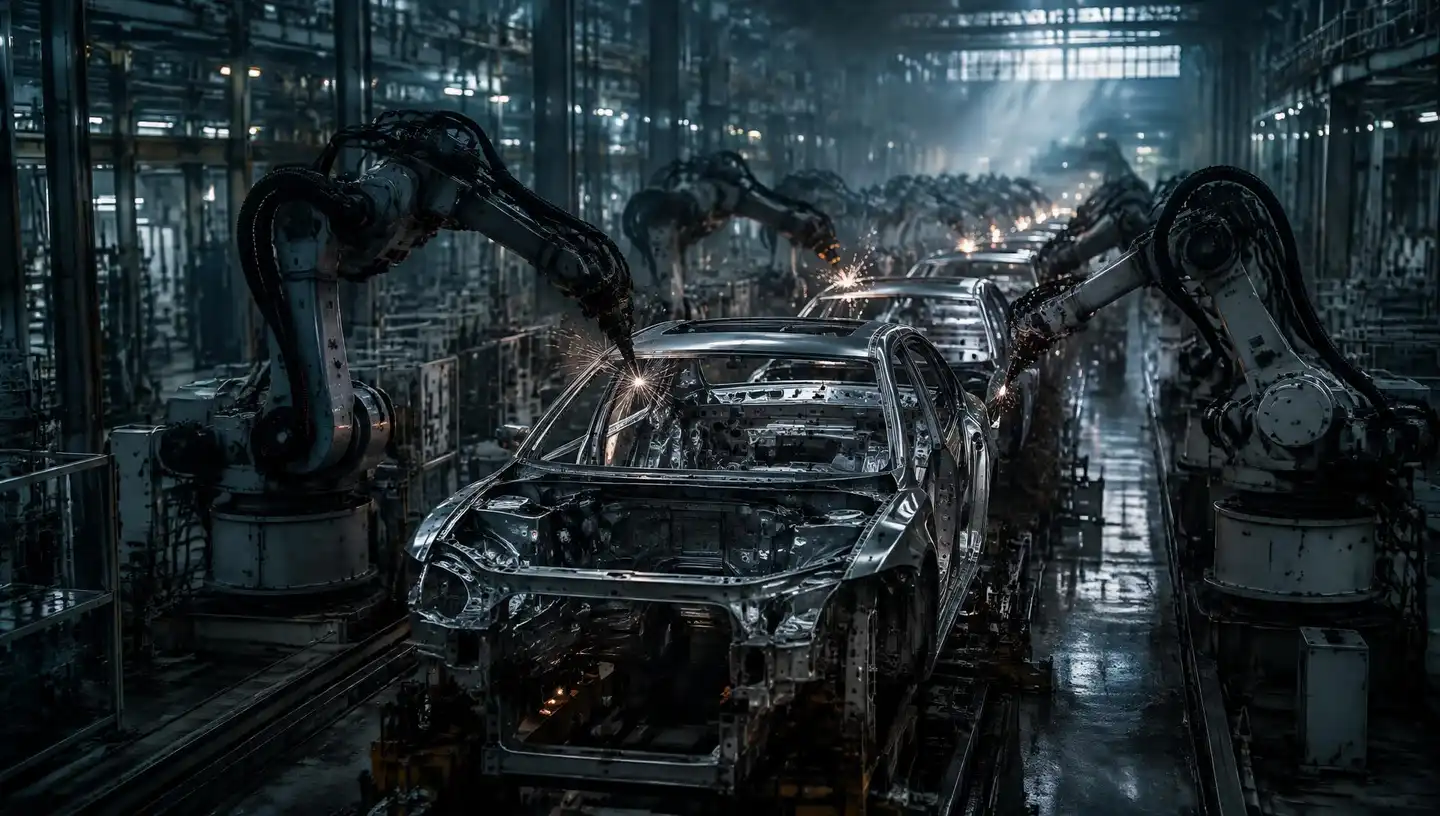
A plant engineer, operations manager or procurement lead who reaches this point usually has a production requirement that standard equipment cannot meet and has to decide how to scope the build, which kind of builder to approach and what to put in an RFQ. The decision turns on how well the requirement is defined, how much controls and integration work it carries, and how each builder handles safety, testing and support.
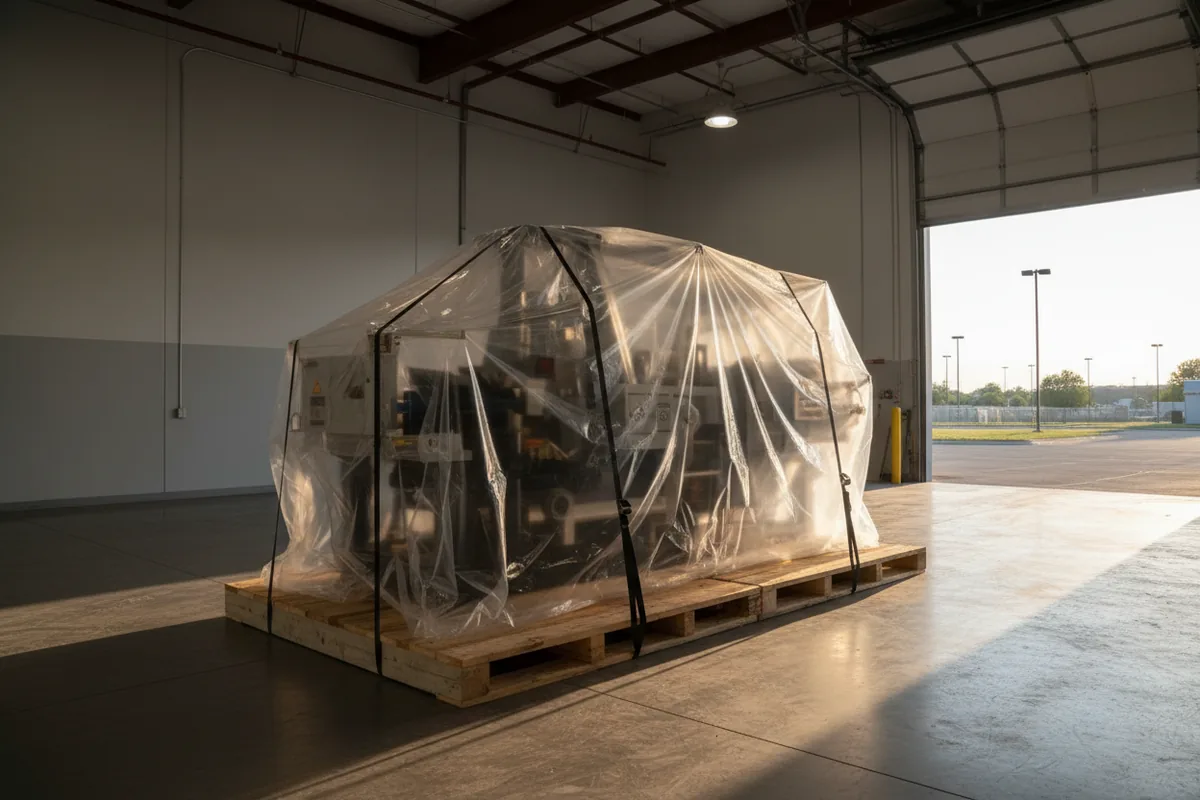
Custom machinery manufacturers design and build production equipment to one buyer's requirement: a specific part, process, rate or floor space that catalog equipment does not handle. They take a written specification and turn it into engineering drawings, a fabricated and tested machine, and the documentation and training needed to run and maintain it.
On this page
- Key Takeaways for Buyers Scoping a Custom Machine Build
- What Custom Machinery Is Built For and Who Uses It
- How a Custom Machine Build Typically Proceeds
- Builder Types and How Their Approaches Differ
- How to Evaluate a Custom Machinery Builder
- What Drives the Cost of a Custom Machine
- When a Custom Machine Build Is Not the Right Path
- Questions to Raise Before Issuing an RFQ
- Frequently asked questions
- Sources
Key Takeaways for Buyers Scoping a Custom Machine Build
- Custom machinery is purpose-built. It is designed to a buyer's production requirement, not selected from a catalog.
- It differs from modified standard equipment. A modified machine starts from an existing catalog model; a custom machine starts from the requirement. A turnkey production line goes further still, joining several machines into one delivered line.
- Machine guarding applies. Under 29 C.F.R. § 1910.212, one or more methods of machine guarding "shall be provided to protect the operator and other employees in the machine area from hazards such as those created by point of operation, ingoing nip points, rotating parts, flying chips and sparks."
- Hazardous energy control applies. 29 C.F.R. § 1910.147 covers "the servicing and maintenance of machines and equipment in which the unexpected energization or start up of the machines or equipment, or release of stored energy could cause injury to employees," subject to specific exclusions listed in the regulation.
- Specification depth drives cost. Engineering complexity, integration work and materials shape the price, which the builder's written proposal states.
What Custom Machinery Is Built For and Who Uses It
Custom builds start where catalog equipment stops. The usual triggers are a part geometry no standard fixture or tooling accepts, a proprietary process the buyer does not want built on a generic platform, or a rate or footprint constraint that catalog machines cannot meet within the space and line layout available.
Custom builds appear across many kinds of manufacturing, including automotive components, food and beverage processing, medical device assembly, electronics assembly and packaging. Each brings its own materials, sanitation, traceability or handling conditions into the specification.
The buyer who fits has two things in place:
- A defined requirement. The part, the process steps, the target rate and the site constraints are written down and stable.
- Internal ownership. A named engineer or manager owns the project, answers the builder's questions and signs off on drawings.
The buyer who does not fit yet is one whose process is still changing or who has no technical owner inside the plant. A builder can engineer to a specification, but it cannot supply the decisions about the process that only the plant can make.
How a Custom Machine Build Typically Proceeds
A custom machine project moves through defined stages, and the buyer supplies something at nearly every one. Overall project duration depends on the scope and is set out in the builder's proposal and milestone schedule.
Step 1: Requirement definition and specification
The buyer documents the part, the process, rate targets, footprint, utilities and the equipment upstream and downstream. The builder reviews it and raises questions.
Step 2: Concept and feasibility
The builder proposes a machine concept and identifies technical risks. The buyer reviews whether the concept matches the process and the plant floor.
Step 3: Detailed engineering and design
Mechanical, electrical and controls drawings are produced. The buyer's signed-off drawings mark the design freeze, after which changes become change orders.
Step 4: Fabrication
The builder machines, welds and assembles the frame and mechanisms and wires the control panels. The buyer may supply sample parts and materials for testing.
Step 5: Factory acceptance testing
Factory acceptance testing (FAT) is a structured test at the builder's facility, before shipment, that checks the machine against the agreed specification using pass/fail criteria set in the contract. Buyer personnel typically attend.
Step 6: Installation, commissioning and training
The buyer provides site access, utilities and a prepared foundation. Commissioning is the work of bringing the installed machine into working order on site and confirming it performs to specification with the plant's own materials and connected systems. The buyer then provides the operators and maintenance staff who will be trained.
Guarding under 29 C.F.R. § 1910.212 and hazardous energy control under 29 C.F.R. § 1910.147 are points both the builder and the buyer address before the machine enters service; the contract and the parties settle how that work is divided. The guarding rule also states that "Machines designed for a fixed location shall be securely anchored to prevent walking or moving." Separately, 29 U.S.C. § 654 states that each employer "shall comply with occupational safety and health standards promulgated under this chapter."
OSHA's Machine Guarding page states that "Any machine part, function, or process that may cause injury must be safeguarded." The same page lists an OSHA Instruction dated June 27, 2025, describing the continued implementation of a National Emphasis Program to identify and reduce or eliminate amputation hazards in manufacturing industries.
Builder Types and How Their Approaches Differ
Three kinds of firms build custom machines, and the difference between them is mostly how much engineering and controls work happens under one roof.
- Job shop: a fabrication-focused firm that machines, welds and assembles to drawings, with less engineering depth of its own.
- Full-service custom machine builder: a firm that does mechanical and electrical engineering, fabrication, assembly and testing in-house.
- Automation integrator that designs and builds: a firm that adds controls and software integration, including PLC programming, HMI design and machine vision.
A PLC (programmable logic controller) is the industrial computer that runs a machine's sequence. An HMI (human-machine interface) is the screen and controls an operator uses to run it. Machine vision is a camera-and-software system that inspects, locates or measures parts.
| Builder type | Main scope | Engineering depth | Controls integration |
|---|---|---|---|
| Job shop | Fabrication and assembly to drawings | Limited in-house | Usually supplied by others |
| Full-service custom machine builder | Design, build and test | Mechanical and electrical in-house | Varies by firm |
| Automation integrator that designs and builds | Design, build, controls and software | Mechanical, electrical and controls | PLC, HMI and vision included in scope |
Scope is the line that matters most. Some builders deliver a mechanical machine only, leaving controls to the buyer or another firm; others deliver a fully integrated machine commissioned with its controls.
Contracts usually follow one of two models. A fixed-price contract sets one price for a defined scope, with changes handled as change orders. A time-and-materials contract bills for hours and materials used. Payments are often tied to milestones such as design sign-off, FAT and commissioning. A turnkey line contract extends past any single machine.
How to Evaluate a Custom Machinery Builder
Evaluation comes down to four areas, and the same criteria can be applied to every candidate.
Technical capability
- Confirm in-house engineering across mechanical, electrical and controls work.
- Review fabrication capacity, including machining, welding and assembly space.
- Ask about experience with the materials, processes and conditions in the application.
Project management
- Request a sample milestone schedule and the firm's change-order process.
- Ask for the FAT protocol and how pass/fail criteria are written.
- Review a sample documentation package: drawings, bill of materials (BOM) and manuals.
Safety posture
- Ask how the design addresses guarding under 29 C.F.R. § 1910.212.
- Ask what the documentation provides for energy isolation points relevant to 29 C.F.R. § 1910.147.
After-sale support
- Ask about spare parts availability, warranty terms and remote diagnostics.
Some buyers look to industry associations, including A3 (Association for Advancing Automation) and CSIA (Control System Integrators Association), for buyer-side evaluation frameworks; what any framework contains is stated by the association itself.
A builder whose core strength is fabrication may not be the right fit when the requirement includes integrated controls, machine vision or IIoT connectivity. IIoT (industrial internet of things) means connecting machines to networks so their data can be collected and monitored.
What Drives the Cost of a Custom Machine
Each item the specification calls for adds engineering, parts or labor to the build, and those items fall into three groups.
Primary drivers
- Engineering hours, set by the complexity of the mechanical and controls design
- Materials and components: structural steel, actuators, drives, and PLC and HMI hardware
- Fabrication labor
- Integration and commissioning labor
- FAT time
Secondary drivers
- Number of axes of motion
- Whether a machine vision system is included
- Complexity of the safety guarding design
- Depth of the documentation package
- Size of the spare parts package
Variables the buyer controls
- How complete the specification is at RFQ stage
- Change orders after design freeze
- Site readiness when the machine arrives
The purchase price is only part of the cost. Total cost of ownership (TCO) is the full cost of owning and running a machine over its life. Three factors affect TCO after the purchase order is closed:
- Maintenance access. A machine designed so technicians can reach wear parts and energy isolation points shapes how much labor routine servicing takes.
- Spare parts standardization. When components match ones the plant already stocks, the maintenance store carries fewer distinct parts, and a failed component can be replaced from existing inventory rather than ordered.
- Training. Operators and maintenance staff who know the machine affect how it runs and how it is serviced over its life.
When a Custom Machine Build Is Not the Right Path
A custom build is the wrong tool in several plain situations:
- The process is not yet demonstrated. It has not run reliably at bench or pilot scale.
- Volume is too low. Production volume does not justify the engineering and build cost.
- Standard equipment works. A catalog or semi-custom machine meets the requirement.
- No internal owner exists. Nobody in the plant can make process decisions and sign off on drawings.
An unstable process specification shows up as change orders, cost growth and schedule slip, because each change after design freeze reopens engineering and fabrication work.
Modified standard equipment and semi-custom platforms are alternatives to evaluate first. A builder may adapt tooling, fixtures or controls on an existing machine design, which keeps more of the design already in use on other floors.
Questions to Raise Before Issuing an RFQ
An RFQ (request for quotation) is the document a buyer sends to builders asking for a priced proposal against a defined scope. Its foundation is the buyer's own specification: process parameters, throughput targets, footprint constraints, utility connections and integration requirements. A builder cannot quote accurately without it.
Questions to put to each builder:
- Which engineering and fabrication work is done in-house, and which is subcontracted?
- What does your FAT protocol include, and how are pass/fail criteria defined?
- How do your design deliverables address guarding under 29 C.F.R. § 1910.212 and energy control under 29 C.F.R. § 1910.147?
- What does the documentation package contain?
- What does the warranty cover, and for how long?
- What are spare parts lead times for critical components?
- What training format do you use, and who delivers it?
Having the production requirement and site conditions documented in one written specification before approaching builders means the proposals that come back reflect the actual scope and can be compared line by line.
Independent referral
Your next project deserves a clearer starting point.
Describe your requirements. Where there is a fit, we may introduce you to relevant providers.
Industrial Technology Exchange
How the independent referral process works
- DescribeSubmit a short inquiry describing your project, facility and timeline.
- ReviewWe review the inquiry for clarity and fit. Incomplete or out-of-scope requests may not be referred.
- ConnectWith your consent, relevant third-party providers may contact you. You decide whether to engage.
Testimonials
Frequently asked questions
What is a custom machinery manufacturer?
A custom machinery manufacturer designs and builds production equipment to a buyer's specific requirement, such as part geometry, process, rate or footprint, rather than selling from a catalog. That separates it from standard equipment makers, and from a systems integrator that integrates controls but does not fabricate the machine.
How do I find custom machinery manufacturers in the United States?
Buyers find them through industry associations such as A3, CSIA and PMMI ProSource for packaging, through trade shows, and through referrals from controls engineers or equipment makers. Each candidate is then compared against the same written specification and evaluation criteria.
What should an RFQ for a custom machine include?
Beyond the part, process and rate, an RFQ carries footprint and utility constraints, integration requirements such as PLC platform, HMI and connected equipment, guarding expectations referencing 29 C.F.R. § 1910.212, documentation requirements, FAT criteria and delivery terms.
What OSHA requirements apply to custom-built machinery?
29 C.F.R. § 1910.212 requires one or more methods of machine guarding against hazards including point of operation, ingoing nip points, rotating parts, and flying chips and sparks. 29 C.F.R. § 1910.147 covers control of hazardous energy during servicing and maintenance, with exclusions listed in the regulation. OSHA's Machine Guarding page describes safeguarding and the amputation emphasis program.
What is the difference between a custom machine builder and a systems integrator?
A custom machine builder designs and fabricates the mechanical machine and may or may not integrate controls. A systems integrator designs and integrates controls, software and automation components, sometimes on a builder's mechanical platform. Some firms do both, and the requirement determines which type fits.
What drives the cost of a custom machine build?
The scope of engineering, components, labor and testing sets the price, and the buyer influences it most through how complete the specification is and how few changes follow design freeze. Costs after purchase, such as maintenance and spare parts, also count toward total cost of ownership.
What is a factory acceptance test (FAT) for custom machinery?
A FAT is the pre-shipment check at the builder's facility. Its protocol and pass/fail criteria are typically written into the contract before fabrication begins, so both parties know in advance what the machine has to demonstrate.
How do I evaluate whether a custom machine builder can handle my project?
Compare in-house engineering depth across mechanical, electrical and controls work, fabrication capacity, relevant process or industry experience, project management approach, how guarding and energy control are documented, and after-sale support, applying the same criteria to every candidate.