
You may be a plant engineer scoping a first robotic cell, an operations manager replacing a manual station, or a procurement lead preparing an RFQ (request for quotation, the document that asks suppliers to price a defined scope). The decision in front of you is less about which robot to buy and more about which company will design, build and stand behind the system around it. What follows covers who integrators fit, how a project runs, how integrator types differ, what to ask about safety and support, and what shapes the price.
A robotics system integrator is the company that turns a robot into a working production cell. It selects the robot, designs the tooling, guarding and controls around it, programs and installs the system, tests it against agreed criteria and trains your staff. The integrator answers for the complete cell, not only the robot arm.
On this page
- Key Points About Robotics System Integrators
- Which Facilities and Applications Robotics System Integrators Serve
- How a Robotics Integration Project Typically Unfolds
- Types of Robotics System Integrators and How They Differ
- How to Evaluate a Robotics System Integrator
- What Drives the Cost of a Robotics Integration Project
- When a Robotics System Integrator Is Not the Right Fit
- Questions to Raise Before Requesting a Proposal
- Frequently asked questions
- Sources
Key Points About Robotics System Integrators
An integrator's work sits between the robot maker and the plant floor. The robot manufacturer builds the arm or mobile platform; the integrator designs and builds the complete cell that makes that robot perform a defined manufacturing or material-handling task.
- What the cell includes: beyond the robot itself, controls, safety guarding, end-of-arm tooling (the gripper, torch or tool mounted on the robot), vision and conveyance.
- What an integrator typically delivers: system design, robot selection and procurement, cell fabrication, PLC and HMI programming, safety guarding design, installation, commissioning, operator training and post-commissioning support.
- Key terms: a PLC (programmable logic controller) is the industrial computer that sequences the cell; an HMI (human-machine interface) is the screen or panel operators use to run it; commissioning is the process of bringing the installed system into working operation.
- Why the choice matters: the integrator is the single point of accountability for the whole system, so its design, documentation and support terms shape how the cell performs and how safely it is maintained.
Which Facilities and Applications Robotics System Integrators Serve
Industrial robots, as OSHA describes them on its Robotics page, are "programmable multifunctional mechanical devices designed to move material, parts, tools, or specialized devices through variable programmed motions," with functions including "material handling, assembly, welding, machine tool load and unload functions, painting, spraying, and so forth." OSHA's page adds that robots are generally used for unsafe, hazardous, highly repetitive and unpleasant tasks.
Integrators build cells around application categories such as:
- Arc and spot welding
- Material handling and palletizing
- Machine tending (loading and unloading machine tools)
- Assembly
- Painting and coating
- Pick-and-place
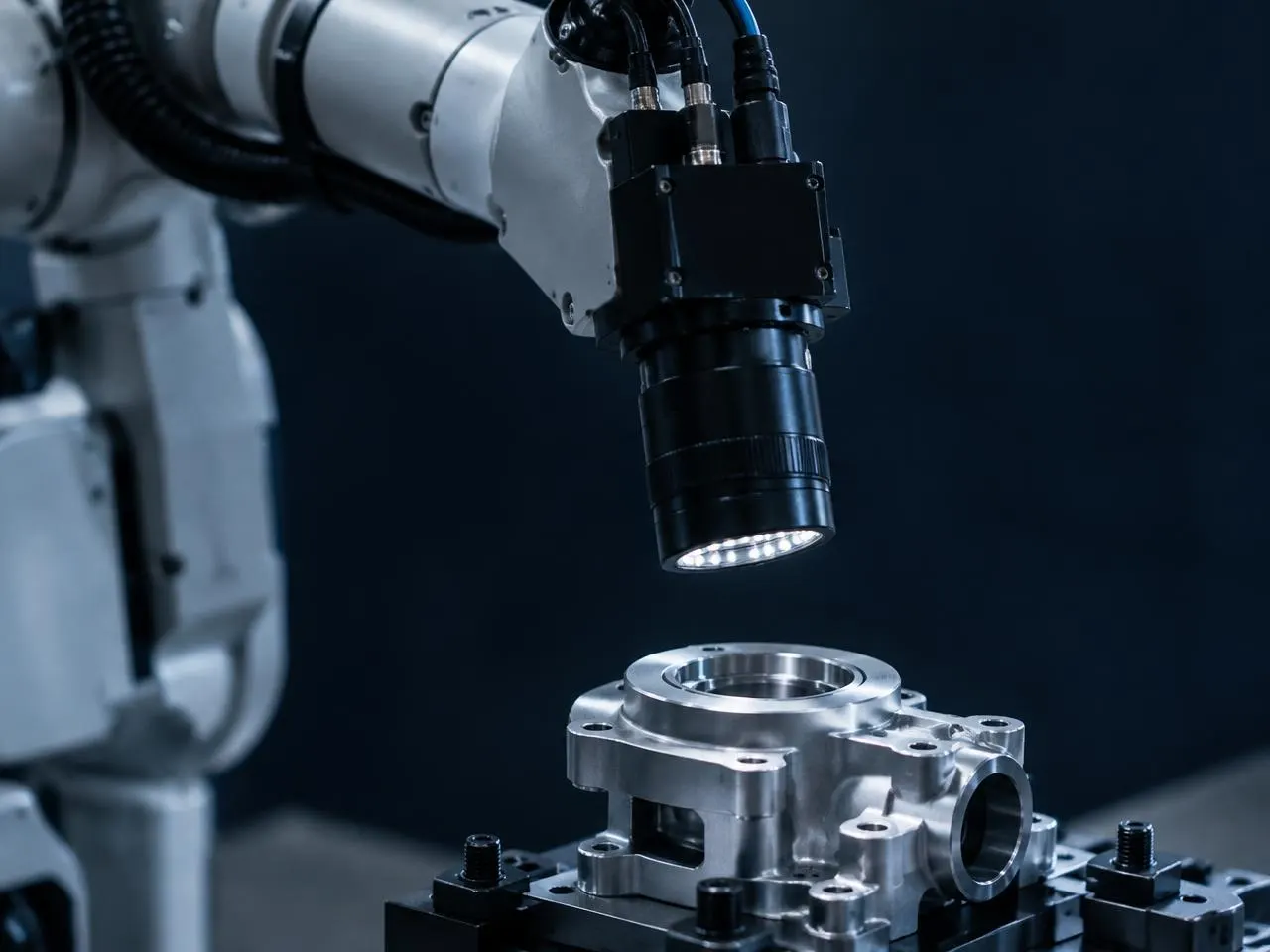
- Inspection and quality checks, often using machine vision (cameras and software that locate or inspect parts)
- Packaging
Integration work appears across automotive and tier suppliers, food and beverage, consumer goods, electronics, metal fabrication, pharmaceutical and medical device production, and warehousing and distribution.
Integrators differ in focus. Some concentrate on one application or one robot brand; others take on many applications across brands. That focus affects fit: a cell for wash-down food handling and a cell for heavy structural welding draw on different design knowledge.
Both cobot deployments and traditional industrial robot cells fall within integrator scope. A cobot (collaborative robot) is a robot designed to work near people under defined conditions; its guarding and risk-assessment approach differs from that of a fenced, high-speed industrial cell.
How a Robotics Integration Project Typically Unfolds
The sequence below describes how an integration engagement generally runs. The contract for a specific project sets the actual stages, deliverables and dates.
Step 1: Application assessment and feasibility
The integrator reviews the part, the process, the production volume and the facility constraints. The goal is to judge whether automation is feasible for that task and which approach fits it.
Step 2: System design and proposal
The integrator produces a conceptual design, a bill of materials (the list of components the cell will use) and a project scope. This proposal is the document the buyer evaluates before committing, and it becomes the baseline for later scope changes.
Step 3: Cell fabrication and programming
The integrator builds the cell, programs the robot controller and PLC, integrates vision or other sensors, and designs the safety guarding. Changes to the part or process at this stage usually become scope changes.
Step 4: Factory acceptance test (FAT)
A factory acceptance test (FAT) is a structured test of the completed cell at the integrator's facility, run against agreed acceptance criteria before shipment. It lets the buyer see the system perform before it leaves the integrator's floor.
Step 5: Installation and site acceptance test (SAT)
The cell is installed at the buyer's facility and put through a site acceptance test (SAT), a test under production conditions against the criteria the contract defines.
Step 6: Operator and maintenance training and handoff
The integrator trains the buyer's operators and maintenance staff and transfers documentation, such as drawings, programs and procedures.
At every stage the buyer carries its own share of the scope: part samples, facility access, utilities and trained personnel. Gaps on the buyer's side affect the schedule as directly as gaps on the integrator's.
Types of Robotics System Integrators and How They Differ
Four business models show up when a buyer starts contacting suppliers. Each describes how the model generally works, not any particular company.
| Model | How it generally works | Hardware choice | Buyer involvement during build |
|---|---|---|---|
| OEM-authorized integrator | Authorized by a robot manufacturer to sell and support that maker's robots; may have access to the manufacturer's training, technical support and pricing programs | Centered on one maker's platform | Set by the contract |
| Independent integrator | Not tied to a single robot brand; selects the platform for the application | Broader choice across brands | Set by the contract |
| Turnkey integrator | Designs, builds, installs and commissions the full system and hands it over ready to run | Chosen by the integrator within the agreed scope | Limited during the build |
| Value-added reseller (VAR) | Resells a manufacturer's robot with lighter integration services | Tied to the resold product | Higher, since the buyer or another party covers remaining integration |
The trade-offs follow from the model. An OEM-authorized integrator may bring close ties to one platform, at the cost of narrower hardware choice. An independent integrator brings flexibility, and the buyer then asks about depth on the specific platform chosen. A turnkey engagement places more responsibility with the integrator and less day-to-day control with the buyer. A VAR arrangement suits a narrower scope and leaves more integration work with the buyer. One company can also operate under more than one model.
How to Evaluate a Robotics System Integrator
Comparing integrators is most useful when the same criteria are applied the same way to each one. The criteria that tend to separate one integrator from another are the ones below.
Application experience. Documented examples of completed cells in the same application category and industry carry the most weight. A welding integrator and a palletizing integrator run different businesses, and past work shows which one a company actually is.
Robot and controls depth. Programming depth on the specific robot platform, and on the PLC and HMI platforms the project requires, matters most where the cell must match controls already on your floor.
Safety design capability. This covers how the integrator designs guarding and safety-rated control circuits, and how it performs and documents risk assessments. OSHA's Robotics page states that "many robot accidents occur during non-routine operating conditions, such as programming, maintenance, testing, setup, or adjustment," and that during many of these operations a worker "may temporarily be within the robot's working envelope where unintended operations could result in injuries." The same page states that there are currently no specific OSHA standards for the robotics industry, so the general federal rules that follow carry weight.
Under 29 U.S.C. § 654, each employer shall furnish a place of employment free from recognized hazards that are causing or are likely to cause death or serious physical harm to employees, and shall comply with the occupational safety and health standards promulgated under that chapter.
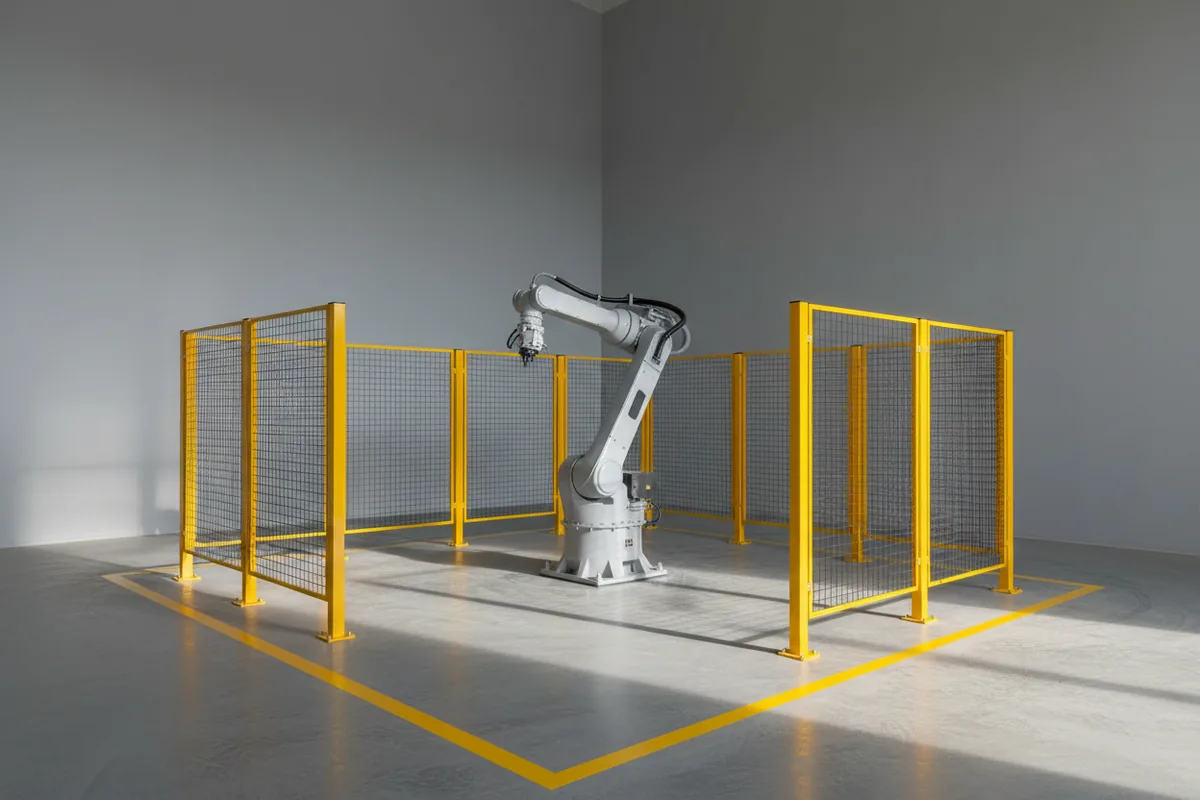
Under 29 C.F.R. § 1910.212, one or more methods of machine guarding shall be provided to protect the operator and other employees in the machine area from hazards such as those created by point of operation, ingoing nip points, rotating parts, flying chips and sparks; the section gives barrier guards, two-hand tripping devices and electronic safety devices as examples, and requires that a guard not offer an accident hazard in itself. A useful conversation with each integrator is how its guarding design addresses these hazards.
Under 29 C.F.R. § 1910.147, the employer shall establish a program of energy control procedures, employee training and periodic inspections so that, before any employee services or maintains a machine where unexpected energizing, start-up or release of stored energy could occur and cause injury, the machine is isolated from the energy source and rendered inoperative. The section also states that when new machines or equipment are installed, energy isolating devices shall be designed to accept a lockout device. A related point to raise is what lockout/tagout documentation and training material the integrator supplies for the cell. How these rules apply to a specific installation is for the employer, OSHA and a qualified engineer to confirm.
Project management. How scope changes are handled, how milestones are tracked and how status is reported all show how a project will run day to day. A named project manager on the account is a concrete indicator.
FAT and SAT process. The acceptance criteria, who defines them and what the contract says happens if the cell does not meet them are worth settling before signing.
Post-commissioning support. What is available after handoff, such as remote diagnostics, spare parts stocking and on-site response, and on what terms, belongs in the contract. These are contract terms to read, not promises to accept.
References. Buyers in the same industry and application who are willing to speak offer a view that a proposal cannot.
What Drives the Cost of a Robotics Integration Project
The integrator's written proposal is the source of the figure for any specific project; no general range applies across cells this different. What a buyer can control is how clearly the cost drivers are scoped.
- Robot platform and payload class: a small-payload assembly robot and a high-payload palletizing robot carry different hardware costs.
- Cell complexity: the number of robots, axes of motion, end-of-arm tooling, vision systems, conveyance and guarding each add scope.
- Custom versus standard cell: a cell built around a unique part geometry involves more design and fabrication than a standard cell adapted to a common application.
- Controls and integration scope: connecting the cell to existing PLCs or to plant systems adds engineering hours. Those systems include MES (manufacturing execution software, which tracks and directs production on the floor), ERP (enterprise resource planning software for orders, inventory and finance) and SCADA (supervisory control and data acquisition, which monitors and controls equipment across a site). A standalone cell needs less integration than one tied into a plant-wide network.
- Installation conditions: ceiling height, floor load, utility availability and access constraints at your facility affect installation work.
- FAT and SAT scope: the depth of acceptance testing written into the contract affects total project cost.
- Training and documentation: the scope of operator and maintenance training and the depth of as-built documentation are cost lines of their own.
- Support terms: a multi-year support agreement adds to total cost of ownership (TCO), the full cost of owning the cell over its life rather than its purchase price alone.
Comparing proposals line by line against these drivers makes differences in scope visible, which matters more than comparing totals alone.
When a Robotics System Integrator Is Not the Right Fit
A full integration engagement fits a defined, repeatable task. Several situations point elsewhere.
Very low volume or a highly variable part mix. A full custom cell is hard to justify when volume is low or part geometry changes often. A cobot deployed by in-house staff, or a lighter VAR engagement, may fit better.
Proof-of-concept stage. A buyer who has not yet confirmed the process can be automated may find a feasibility study or a small pilot a better first step than a full project.
In-house integration capability. A facility with a capable controls and robotics engineering team may be able to integrate a standard robot cell without a full-service integrator, while still carrying the employer's own guarding and energy-control duties.
Scope not yet defined. Without a defined application, part, volume and facility constraints, an integrator cannot produce a meaningful proposal. That is a matter of sequence rather than a shortcoming: the definition work comes first in any route.
For your own project, the useful question is which of these conditions describes it today, since each points to a different first step.
Questions to Raise Before Requesting a Proposal
Working through a handful of internal questions before contacting integrators tends to produce proposals that can be compared side by side, and leaves fewer open points to become scope changes later.
The first set concerns the work itself. What task will the cell perform, on what part or material, and at what production rate must it sustain that work? What does the part look like on paper: drawings, CAD files, weight, surface finish and any fragility or contamination limits? And how does the process run now, in terms of current cycle time, operator steps, and the upstream and downstream equipment the cell must interface with?
The second set concerns the site. What floor space, ceiling height and utility connections are available, and what environmental conditions apply, such as temperature, humidity, dust or wash-down? Which PLC platform, MES, ERP, SCADA or quality systems are already in place for the cell to connect to?
The last set concerns ownership. What does "working" mean for this cell, in terms such as cycle rate, uptime and defect rate, and who signs off? Who will manage the project, own the cell after handoff and receive training?
Of everything gathered, a process flow diagram and a part drawing most directly shape an integrator's proposal scope, and having both in hand before the first conversation shortens the scoping phase.
Independent referral
Your next project deserves a clearer starting point.
Describe your requirements. Where there is a fit, we may introduce you to relevant providers.
Industrial Technology Exchange
How the independent referral process works
- DescribeSubmit a short inquiry describing your project, facility and timeline.
- ReviewWe review the inquiry for clarity and fit. Incomplete or out-of-scope requests may not be referred.
- ConnectWith your consent, relevant third-party providers may contact you. You decide whether to engage.
Testimonials
Frequently asked questions
What does a robotics system integrator do?
It takes responsibility for making a robot do a specific production job: designing the cell around the robot, building and programming it, installing it at the plant and handing it over ready to run. The robot is one component; the integrator answers for the whole cell.
What are examples of robotics system integrators?
The useful examples are categories: OEM-authorized integrators aligned with one robot manufacturer, independent integrators that work across brands, turnkey cell builders, and value-added resellers that pair a robot with lighter integration services. A single company may work under more than one of these models.
What is the difference between a robot manufacturer and a system integrator?
The manufacturer designs and builds the robot arm or mobile platform. The integrator designs the working cell around it: selecting the robot, building tooling and guarding, writing programs, connecting to plant controls and commissioning the system.
What safety rules apply to robotic work cells in the United States?
OSHA's Robotics page states there are currently no specific OSHA standards for the robotics industry. General rules still apply, including the employer duties in 29 U.S.C. § 654, the machine guarding requirements in 29 C.F.R. § 1910.212 and the hazardous energy control requirements in 29 C.F.R. § 1910.147. OSHA and a qualified engineer confirm how they apply to a specific cell.
How do I evaluate a robotics system integrator?
In short, by applying the same criteria to each candidate: proven work in the same application, depth on the required platforms, safety design practice, a defined acceptance-test process, support terms and references. The strongest signal is usually completed cells similar to the one being scoped.
What information does an integrator need to produce a proposal?
A description of the task, part drawings or CAD files, the production rate, floor space and facility constraints, the existing systems the cell must connect to, and defined acceptance criteria. More complete information yields proposals that are easier to compare.
What is a factory acceptance test (FAT) in a robotics project?
A FAT is a structured test of the completed cell at the integrator's facility, run against agreed criteria before shipment. It gives the buyer a chance to confirm the system meets the contract before installation begins.