
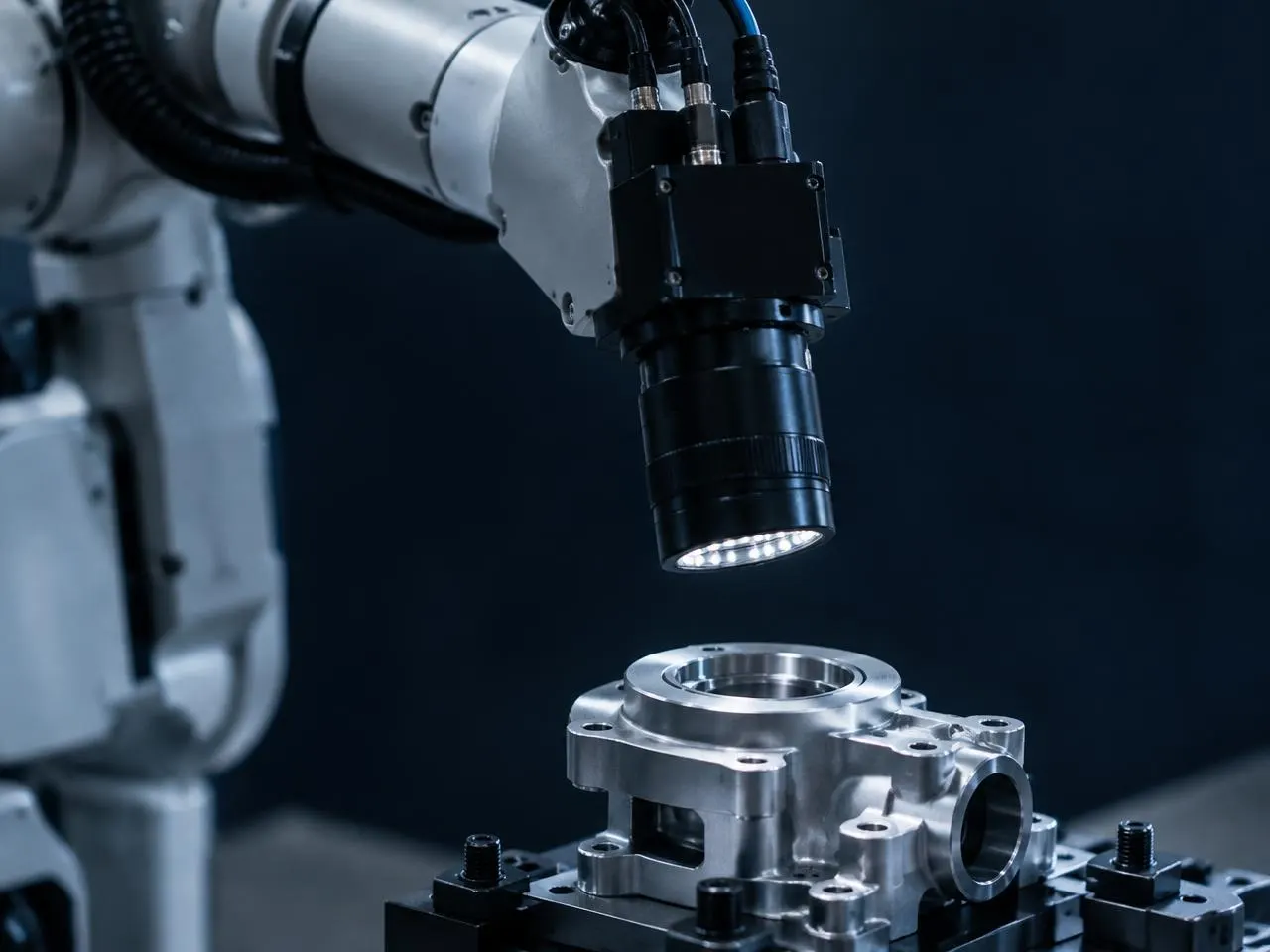
A plant engineer or operations manager scoping a vision project is usually trying to answer several questions at once: whether the application is ready for an integrator, what kind of integrator to approach, what the project will involve on the plant's side, and how to compare proposals that look nothing alike. The answers turn on how well the inspection task is defined, how the parts reach the camera, and how deep the system must reach into the plant's PLCs and software. Each is a point a plant can settle in writing before the first supplier conversation.
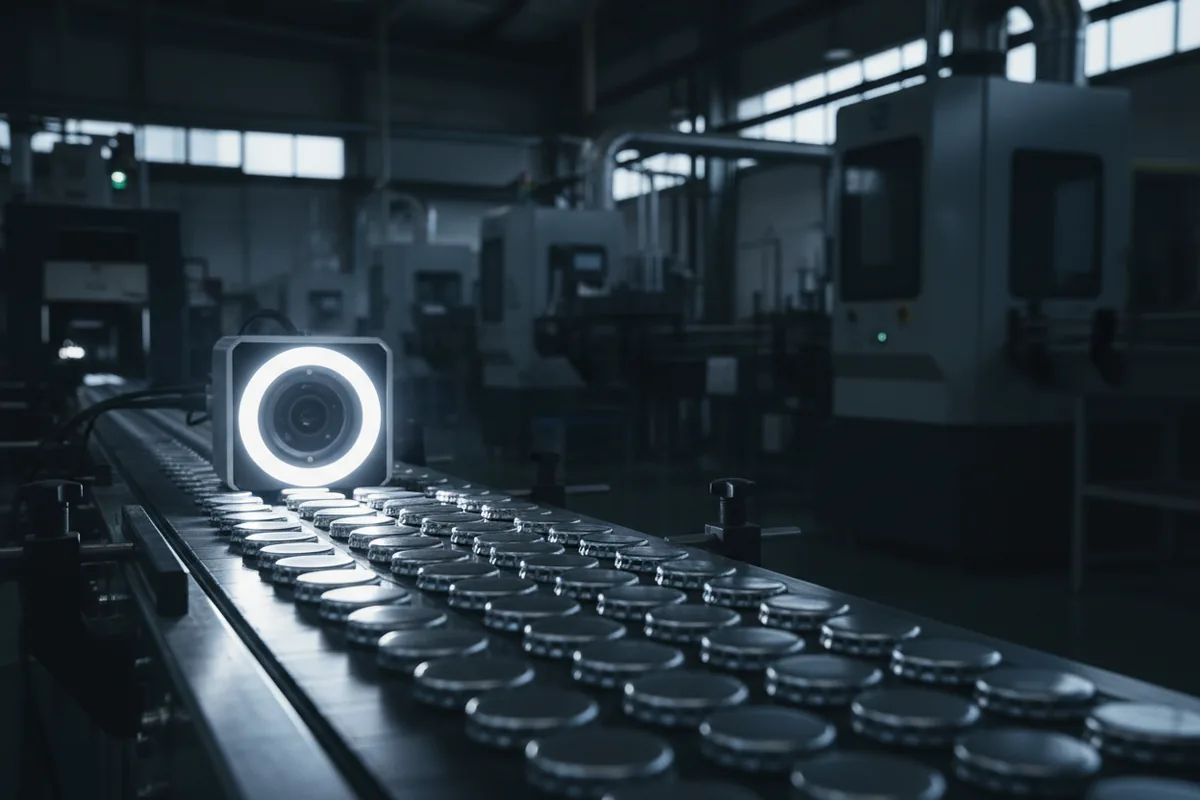
A machine vision integrator designs, builds, and commissions a complete camera-based inspection or measurement system for a production line. That work covers cameras, lenses, lighting, processing hardware and software, and the connection to the plant's existing controls. The integrator delivers a working, tested system rather than a box of components.
On this page
- Key Takeaways for Buyers Scoping a Machine Vision Project
- What Facilities and Applications Machine Vision Integration Fits
- How a Machine Vision Integration Project Works
- What Shapes a Machine Vision Project Timeline
- Types of Machine Vision Integrators and How Their Models Differ
- How to Evaluate a Machine Vision Integrator
- What Drives the Cost of a Machine Vision Integration Project
- When a Machine Vision Integrator Is Not the Right Fit
- Questions to Ask a Machine Vision Integrator Before You Commit
- Frequently asked questions
- Sources
Key Takeaways for Buyers Scoping a Machine Vision Project
A machine vision system is a set of cameras, optics, lighting and software that captures images of parts and turns them into decisions, such as pass or fail, a measurement, or a code read. An integrator is the firm that turns those components into a running system on the line.
- The deliverable is a system. The integrator designs, builds, and commissions the vision system and connects it to the plant's controls, instead of supplying components alone.
- The role spans the lifecycle. Requirements definition, hardware selection, software or algorithm development, installation, validation, and handoff to the operations team are all part of the work.
- Four factors shape scope. Project scope, part complexity, required line rate, and the depth of integration with PLCs, MES or ERP systems drive cost and schedule.
- Integrator models differ. They range from hardware-focused value-added resellers to full-service systems integrators that own the whole project.
- Comparable proposals start from shared requirements. Candidates quoting against the same written requirements produce proposals that can be compared.
- Cost appears in the proposal. The integrator's written proposal states the price for the scope it describes.
What Facilities and Applications Machine Vision Integration Fits
Discrete manufacturing lines are the natural home for machine vision: lines where parts arrive in a consistent position, lighting can be controlled, and the inspection criteria can be written down. Under those conditions, a camera sees the same scene each cycle and a defined rule can judge it.
Applications that fit this pattern include:
- Dimensional measurement of features, gaps or positions
- Surface defect detection, such as scratches, voids or contamination
- Barcode reading and optical character recognition (OCR), the reading of printed text
- Assembly verification, confirming the right components are installed
- Label inspection for placement, content and print quality
- Presence and absence checks for parts, fasteners or features
Regulated manufacturers, including medical device, pharmaceutical and automotive plants, often treat documented validation as a project requirement, so the integrator's ability to produce formal test records becomes part of the fit.
Facilities that already run PLC or SCADA infrastructure also fit well. A PLC (programmable logic controller) is the industrial computer that runs machine logic. SCADA (supervisory control and data acquisition) is the software layer that monitors and controls equipment across a line or site. A vision system that can pass its results to these systems can reject a part, stop a station or log a record.
The fit is weaker where part presentation is unstructured, where no control system can receive the vision output, or where pass/fail criteria cannot be stated in measurable terms. An engagement started before those points are settled is premature, for reasons covered under when an integrator is not the right fit.
How a Machine Vision Integration Project Works
A vision project typically moves through six phases. Each phase asks something of the buyer as well as the integrator.
Step 1: Requirements and feasibility
The integrator and the plant define what the system must judge and under what conditions. This includes the inspection criteria, how parts are presented, the required line rate, environmental conditions such as ambient light, vibration and temperature, and the integration points with existing controls. The buyer supplies representative sample parts, including known good and known bad examples.
Step 2: System design
The integrator selects the camera type and resolution, lenses, lighting, processing hardware, and the software or algorithm approach. Lighting design often carries as much weight as the camera itself, because it controls what features appear in the image.
Step 3: Development and bench testing
The system is built and tested against sample parts in the integrator's facility before it reaches the line. The buyer's part here is supplying enough samples, and enough variation, to make the bench results meaningful.
Step 4: Installation and integration
The integrator mounts the hardware and connects the system to the PLC, HMI (human-machine interface, the operator screen), SCADA or MES (manufacturing execution system, the software that tracks production on the floor) as the scope requires. The buyer provides access to controls documentation and to the line.
Safety rules apply to the equipment around the camera. Under 29 C.F.R. § 1910.212, one or more methods of machine guarding must be provided to protect the operator and other employees in the machine area from hazards such as those created by point of operation, ingoing nip points, rotating parts, flying chips and sparks; the regulation gives barrier guards, two-hand tripping devices and electronic safety devices as examples. Where an integrator's crew is engaged as outside servicing personnel in activities covered by the scope and application of the lockout/tagout standard, 29 C.F.R. § 1910.147 requires the on-site employer and the outside employer to inform each other of their respective lockout or tagout procedures. When the vision system serves a robot cell, OSHA's Robotics page states that many robot accidents occur during non-routine operating conditions such as programming, maintenance, testing, setup or adjustment, when a worker may temporarily be within the robot's working envelope. Under federal law, compliance with occupational safety and health standards is each employer's duty; how these rules apply depends on the facts of a particular installation.
Step 5: Validation and acceptance testing
The system runs against production parts, results are documented against the agreed pass/fail criteria, and the buyer signs off. Acceptance criteria written at the start of the project become the yardstick here.
Step 6: Handoff and training
The integrator trains operators and maintenance staff and delivers a documentation package, typically covering the system configuration, settings, drawings and support contacts.
What Shapes a Machine Vision Project Timeline
Buyers often ask about schedule alongside cost, and the same factors drive both. Project scope, part complexity, required line rate and integration depth are the four factors that shape schedule as well as price. In plain terms, the length of a project follows from how much work each of the six phases holds:
- Requirements and feasibility move faster when the plant arrives with measurable pass/fail criteria and representative good and bad samples already in hand.
- Development and bench testing take longer when parts are complex or variable and the application needs custom algorithm work rather than a standard tool.
- Installation and integration grow with each system the vision output must talk to, and depend on access to the line and to controls documentation.
- Validation and acceptance add time where formal validation records are a project requirement, as in regulated industries.
The integrator's proposal is where a schedule for the described scope appears, and comparing schedules across proposals works the same way as comparing cost: against the scope each one includes.
Types of Machine Vision Integrators and How Their Models Differ
The main difference between integrator models is how much of the project the firm is accountable for. Four models cover the range buyers typically encounter:
- Value-added resellers (VARs) supply and configure hardware from one or a few vision platform vendors. They are typically stronger on hardware selection and may subcontract software development or controls integration.
- Full-service systems integrators own the project from requirements through commissioning and typically carry broader controls and software capability.
- OEM-aligned integrators are authorized by a specific vision platform vendor. They have deep product knowledge, though their scope may stay within that vendor's platform.
- Independent integrators are not tied to a single vendor and can specify across platforms, which can matter when an application does not fit one vendor's standard offering.
The comparison rests on scope of accountability, software and algorithm capability, controls integration depth, and the main trade-off of each model. Each model's position reflects how that model generally works; an individual firm's proposal states its actual scope.
| Criterion | VAR | Full-service integrator | OEM-aligned integrator | Independent integrator |
|---|---|---|---|---|
| Scope of accountability | Hardware supply and configuration | Full lifecycle, requirements to commissioning | Within one vendor's platform | Across platforms |
| Software and algorithm work | May be subcontracted | Typically in-house | Deep on one platform's tools | Spans several platforms |
| Controls integration (PLC, HMI, SCADA, MES) | May be subcontracted | Typically broader | Varies by firm's scope | Varies by firm's scope |
| Main trade-off | Narrower accountability | Single point of responsibility, larger scope to price | Platform depth, platform limits | Flexibility, depends on breadth of team |
Each model can suit a different project. A simple presence check on a line with in-house controls engineers places different demands on an integrator than a multi-station, regulated inspection tied to MES.
Vision platform categories in proposals
Proposals also name the kind of vision platform the integrator intends to use. In general terms, three categories appear:
- Smart cameras combine the image sensor and the processing in one self-contained unit.
- PC-based systems send images from one or more cameras to a separate industrial computer that runs the vision software.
- Embedded vision places the processing on a compact board built into the equipment or the camera assembly.
The category a proposal names reflects the integrator's design choice for that application, and the proposal itself describes what the chosen platform includes.
How to Evaluate a Machine Vision Integrator
Evidence of similar work is the first criterion: documented examples of comparable applications, matched on part type, inspection task, line rate and industry, carry more weight than general claims of capability.
Other criteria to compare across candidates:
- Controls and software depth. Whether the integrator has worked with the specific PLC platform, communication protocol and software environment already in the plant.
- Validation capability. For regulated applications, examples of formal validation documentation produced on prior projects.
- Credentials of assigned staff. Which people will work on the project, what vision or automation credentials they hold, and which body issued each one.
- Project management and documentation. A sample project plan, a sample acceptance test procedure and a sample handoff documentation package.
- Post-commissioning support. What the contract includes after go-live, such as remote support, on-site response and software update terms.
- Reference checks. Conversations with at least two prior customers whose applications were similar in complexity.
A provider's statements about its own speed, quality or fit are its claims; the samples and references are how those claims get tested.
What Drives the Cost of a Machine Vision Integration Project
Two proposals for what looks like the same inspection can differ widely, because each integrator prices the scope it has interpreted from the requirements. These factors explain where that scope varies:
- Hardware complexity. The number of cameras, lighting configurations, lens types and the processing hardware the application requires.
- Software and algorithm development. Custom algorithm work for complex or variable parts takes more engineering than configuring a standard tool from a vision platform's library.
- Controls integration depth. Each system the vision output must talk to, whether PLC, HMI, SCADA or MES, adds engineering scope.
- Validation and documentation. Formal validation records for regulated industries add engineering time.
- Installation environment. High temperature, vibration or washdown conditions call for protective enclosures and mounting hardware.
- Stations and line speed. More inspection stations and a faster line increase both hardware and software scope.
- Post-commissioning support. A multi-year support agreement adds to total cost of ownership, meaning the full cost of the system over its working life rather than its purchase price alone.
Comparing proposals line by line against these factors shows where one integrator has included scope another has left out. That comparison says more about a project decision than the bottom-line figure alone.
When a Machine Vision Integrator Is Not the Right Fit
An integrator cannot build a system to criteria that do not exist. When the plant cannot state pass/fail criteria in measurable, repeatable terms before the project starts, the engagement is premature, and the first piece of work is defining the criteria internally.
Other conditions that make an engagement unlikely to succeed:
- Uncontrolled part presentation. Machine vision depends on consistent part position, orientation and surface condition. Parts that arrive randomly oriented, or with highly variable surfaces, typically need upstream fixturing work before standard vision integration fits.
- No place for the output to go. A vision system that cannot send its results to the plant's control system provides limited value. A facility without PLC or SCADA infrastructure may need controls work first, which a controls or automation integrator handles.
- Budget expectations set at component cost. Full-service integration carries engineering, hardware, software and validation costs. A plant expecting a ready-to-run system at the price of a camera is likely to find the proposals far apart from that expectation.
In each case, the alternative is preparatory work, such as criteria definition, fixturing design or controls upgrades, that makes a later vision project viable.
Questions to Ask a Machine Vision Integrator Before You Commit
These questions give each candidate the same test and make the answers comparable.
Which similar applications can you show, and who can I call about them?
A buyer can ask for examples matched on part type, inspection task and industry, with customer contacts.
Who will work on this project, and what credentials do they hold?
The answer names the assigned people, not the firm's whole roster, and the issuing body for each credential.
Can we see a sample acceptance test procedure?
A sample shows how the integrator defines, runs and documents acceptance.
What validation documentation have you produced for regulated applications?
For medical device, pharmaceutical or automotive work, examples show whether the integrator has delivered formal records before.
Which PLC platforms and communication protocols have you integrated with?
The answer can be checked against the controls platform and protocols already running in the plant.
What support is included after go-live?
The proposal can state remote support, on-site response and software update terms in writing.
How are change orders priced and signed off?
A written change-order process shows how scope changes after award are handled.
What happens if the system does not meet acceptance criteria at go-live?
The contract can state the integrator's remedy, the retest process and how payment milestones relate to acceptance.
Which parts of the work, if any, are subcontracted?
Knowing who performs software and controls work clarifies accountability.
Before any of these questions are asked, a written requirements document covering inspection criteria, part presentation, line rate, environmental conditions, integration points and validation needs is the common starting point; issued with the RFQ (request for quotation), it gives every candidate the same basis for a proposal, so the answers and the proposals can be compared side by side.
Independent referral
Your next project deserves a clearer starting point.
Describe your requirements. Where there is a fit, we may introduce you to relevant providers.
Industrial Technology Exchange
How the independent referral process works
- DescribeSubmit a short inquiry describing your project, facility and timeline.
- ReviewWe review the inquiry for clarity and fit. Incomplete or out-of-scope requests may not be referred.
- ConnectWith your consent, relevant third-party providers may contact you. You decide whether to engage.
Testimonials
Frequently asked questions
What does a machine vision integrator do?
A machine vision integrator takes responsibility for a complete vision system: it selects and assembles the cameras, lighting, lenses, processing hardware and software, then connects the system to the plant's existing controls. Its work runs from requirements through handoff, rather than ending with a hardware delivery.
How is a machine vision integrator different from a vision system vendor?
A vendor supplies hardware or software components. An integrator takes responsibility for the complete system: selecting components, developing the application, integrating with plant controls, validating performance and handing off a working system. Some integrators are also authorized resellers for specific vendors.
What information does a facility need to prepare before issuing an RFQ to machine vision integrators?
The core item is a written requirements document covering inspection criteria in measurable pass/fail terms, part presentation and fixturing, line rate, environmental conditions, integration points with existing controls such as the PLC platform, protocol and MES or ERP, and validation requirements. Representative good and bad sample parts support the feasibility work that follows.
What machine guarding requirements apply when a vision system is integrated with robotic or automated equipment?
Under 29 C.F.R. § 1910.212, one or more methods of machine guarding must protect the operator and other employees from hazards such as point of operation, ingoing nip points, rotating parts, flying chips and sparks. OSHA's Robotics page states there are currently no specific OSHA standards for the robotics industry. Compliance with occupational safety and health standards is each employer's duty, and how the rules apply depends on the particular installation.
How do regulated industries like medical devices or pharmaceuticals affect a machine vision integration project?
Regulated applications often require formal validation documentation, which adds engineering scope and time. Asking for examples of that documentation from prior regulated-industry projects is a qualification criterion when comparing integrators.
What is the difference between an OEM-aligned integrator and an independent integrator?
An OEM-aligned integrator is authorized by a specific vision platform vendor and knows that vendor's products deeply, though its scope may stay within that platform. An independent integrator can specify hardware and software across vendors, which can help when an application does not fit one vendor's standard offering.
What should a machine vision integration contract cover?
A contract can state the scope of work, acceptance criteria, validation documentation to be delivered, post-commissioning support terms, the change-order process, and what happens if the system does not meet acceptance criteria at go-live. The provider's written proposal and contract state these terms.