

For a plant engineer, an operations manager or a procurement lead, that position in the middle is the main point. An MES depends on clean data from the planning side and stable signals from the control side, so the scope of the project is set as much by your existing systems as by the software itself. What follows covers the terms, where the data moves, the constraints a plant documents before an evaluation, how deployment models compare, and the questions that separate one MES offering from another.
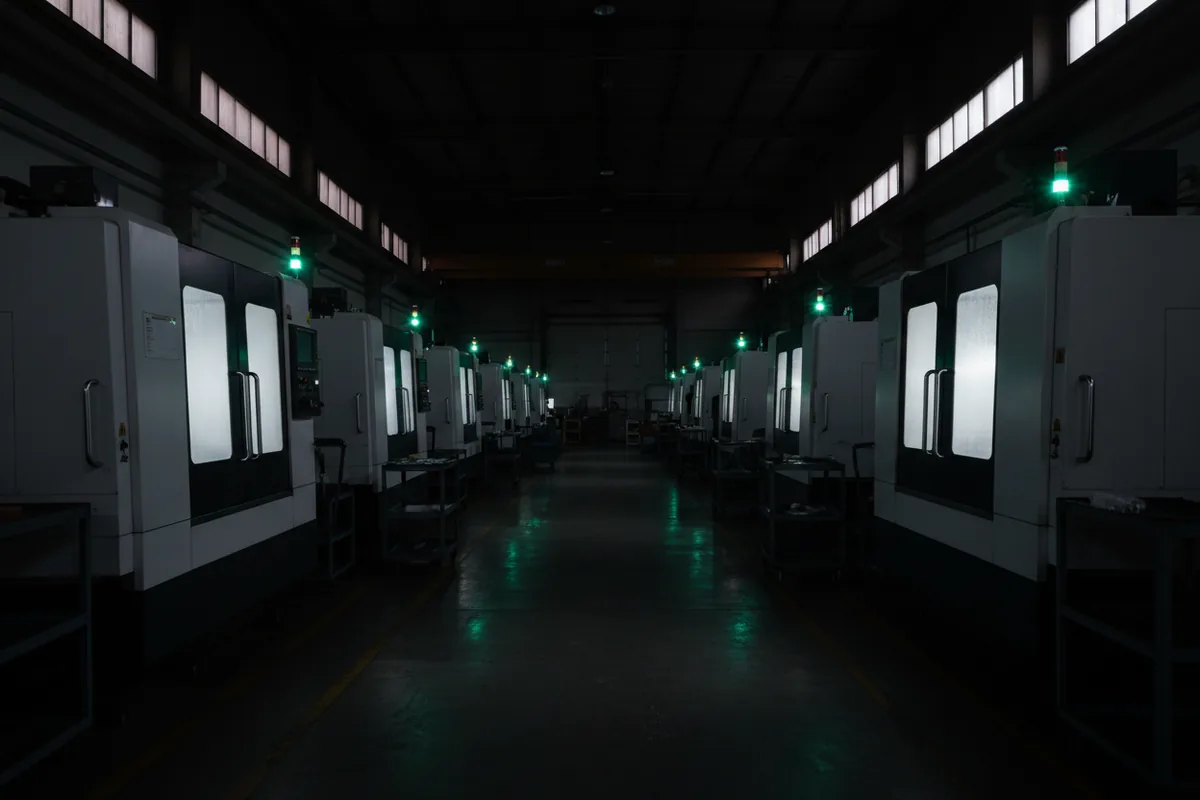
MES software, short for manufacturing execution system software, records and manages production on the shop floor as it happens, from the release of a work order to finished goods. It sits between business planning software (ERP) and machine control systems (SCADA and PLCs). It ties machine, labor, material and quality data to each order.
On this page
- What a Manufacturing Execution System Does
- How MES Connects to the Rest of Your Operation
- Requirements and Constraints Before Selecting an MES
- MES Deployment Models and What Distinguishes Them
- Evaluating MES Options: What to Ask and What to Check
- Steps for Scoping an MES Project and Preparing the RFQ
- Frequently asked questions
- Sources
What a Manufacturing Execution System Does
The ANSI/ISA-95 standard, issued under the ISA name it carries, describes a functional hierarchy for manufacturing systems in which MES functions are placed at Level 3, between business planning and process control. The standard's own text defines those levels and their boundaries, and a vendor's or integrator's proposal can be read against it as a shared vocabulary for scope.
Three terms frame the layers around Level 3:
- ERP (enterprise resource planning) is business software for planning, financials, purchasing and inventory at the order level. It decides what the plant is asked to make.
- SCADA (supervisory control and data acquisition) is software that monitors and supervises equipment and processes, collecting sensor data and alarms across a line or a site.
- PLC (programmable logic controller) is the industrial computer that runs a machine's control logic and sends commands to motors, valves and actuators.
An MES does not plan the business and it does not run the machines. It records what was actually produced, by whom, on which equipment, with which materials, and with what quality result.
Its core functions fall into two broad groups. The first group directs the work itself:
- Work order management: releasing orders to the floor and tracking their status through each operation.
- Production scheduling: sequencing work across lines and work centers at the shift or hour level.
- Labor and machine tracking: recording who worked on an order and which equipment ran it.
For a buyer, these functions replace the paper travelers, whiteboards and spreadsheets that many plants use to know where an order stands, so their value depends on how much of that tracking is manual today.
The second group builds the production record:
- Quality data collection: capturing in-process inspection results and test data against the order.
- Genealogy and traceability: linking each finished lot or serial number to the material lots, equipment and people involved.
- Downtime tracking: logging when equipment stops and the reason codes attached to each stop.
These functions matter most where a plant has to answer questions after the fact, such as which lots a material went into or why a line stopped, and they shape how much data the MES has to pull from the floor.
How MES Connects to the Rest of Your Operation
Integration is where an MES earns or loses its value, because the system is only as complete as the data it receives and returns. Each connection carries different data in a different direction.
Upward to ERP. ERP sends work orders, bills of material (the list of components and quantities for a product) and routings (the sequence of operations) down to the MES. The MES sends actual production counts, labor hours, scrap and quality results back up, so that inventory, costing and order status in ERP reflect what happened on the floor.
Downward to SCADA and PLCs. The MES receives machine status, cycle counts and alarm data from SCADA and PLCs. It associates those signals with the active work order and material lot. An MES does not typically send direct machine commands; control of the equipment remains in the PLC and SCADA layer, and the equipment maker and the controls engineer responsible for the machine decide how that layer behaves.
Sideways to other plant systems.
- QMS (quality management system) software holds nonconformance reports, inspection plans and corrective actions. An MES may pass inspection results and nonconformance events to it, or receive inspection plans from it.
- CMMS (computerized maintenance management system) software manages maintenance work orders and asset history. Downtime events recorded in the MES can trigger or inform maintenance work orders in the CMMS.
- IIoT (industrial internet of things) platforms collect and aggregate sensor data from connected equipment. An MES may consume summarized IIoT data or supply production context that gives raw sensor readings meaning.
Taken together, these links form what is often called a digital thread: a continuous chain of linked records from the customer order through production, quality and shipment. A digital thread describes how records connect; whether it produces any particular benefit for a plant depends on the plant, and no outcome follows from the architecture alone.
For your own project, the useful exercise is to draw these arrows for the systems you already run and mark which ones exist, which are manual, and which are missing.
Requirements and Constraints Before Selecting an MES
Scope comes first, because it determines which MES capabilities matter at all. Several factors shape it:
- Discrete or process manufacturing. Discrete plants build countable units and assemblies; process plants make batches or continuous product by formula or recipe. The data model and the screens differ between them.
- Single site or multi-site. A multi-site rollout adds questions about shared master data, common configurations and cross-site reporting.
- Lines, shifts and product mix. The number of production lines, the shift structure and the variety of products and routings drive configuration effort and transaction volume.
IT/OT infrastructure. IT refers to business information systems; OT (operational technology) refers to the systems that monitor and control physical equipment. An MES depends on dependable network connectivity on the shop floor. Plants with older PLCs or proprietary communication protocols face additional integration work, such as gateways or protocol converters, to bring machine data into the MES.
Data readiness. An MES relies on clean, structured master data: item numbers, routings, bills of material and work center definitions, usually maintained in ERP. Gaps or inconsistencies in that master data become an implementation constraint, since the MES cannot track an operation that is not defined.
Regulated-industry obligations. The FDA's guidance Part 11, Electronic Records; Electronic Signatures - Scope and Application describes the agency's current thinking on 21 C.F.R. Part 11. According to that guidance, Part 11 applies to records in electronic form that are created, modified, maintained, archived, retrieved or transmitted under any records requirements set forth in FDA regulations, and it also applies to electronic records submitted to the FDA under the Federal Food, Drug, and Cosmetic Act and the Public Health Service Act. The guidance calls the underlying record requirements in those Acts and in FDA regulations other than Part 11 "predicate rules."
The same guidance states that the FDA intends to exercise enforcement discretion regarding specific Part 11 requirements for validation of computerized systems and for computer-generated, time-stamped audit trails, while persons must still comply with all applicable predicate rule requirements. It advises basing the approach to validation and audit trails on a justified and documented risk assessment and on the system's potential to affect product quality, safety and record integrity. It notes that audit trails can be particularly appropriate when users are expected to create, modify or delete regulated records during normal operation, which describes much of what an MES does. The guidance states that it contains nonbinding recommendations. Whether particular MES functions fall within Part 11 is a question for the manufacturer's quality and regulatory function and, where needed, the FDA staff the guidance names.
Cybersecurity. An MES sits at the boundary between IT and OT networks, so it falls within the scope of OT security work. NIST's Cybersecurity Framework page presents CSF 2.0 as a resource for industry, government and organizations to reduce cybersecurity risks, with Quick Start Guides, CSF 2.0 Profiles and Informative References (mappings to other NIST resources). The CSF is voluntary guidance; using it is a way to organize security work, and it does not by itself make a plant secure.
MES Deployment Models and What Distinguishes Them
The deployment model decides where the MES software runs and who maintains it. Each model carries a trade-off between control, connectivity and IT workload.
| Criterion | On-premises | Cloud-hosted (SaaS) | Hybrid |
|---|---|---|---|
| Where the software runs | Servers at the plant | The vendor's hosted infrastructure | Core execution at the plant; reporting and analytics in the cloud |
| Dependence on internet connectivity | Shop-floor execution does not depend on it | Depends on stable, low-latency connectivity from the floor to the cloud | Execution runs locally; cloud functions depend on connectivity |
| Data latency for real-time functions | Lower, since data stays on the local network | Governed by the network path to the cloud | Latency-sensitive functions stay local |
| Who handles patching, backups and hardware | The plant's IT staff | The vendor, for the hosted infrastructure | Split between plant and vendor |
| Upgrades | Scheduled and applied by the plant | Managed by the vendor on its release schedule | Local and cloud components may follow different schedules |
| Multi-site rollout | Each site's installation is maintained | May simplify rollout from a shared platform | Cloud layer can provide cross-site visibility |
Edge computing is a related architecture rather than a fourth model. An edge server placed near the machines buffers and preprocesses data locally, then synchronizes it with a central MES. That design is relevant to plants with intermittent connectivity, since production records continue to be captured during a network interruption.
A buyer comparing these models typically works from a short set of criteria:
- Latency requirements: how quickly each function needs data from the floor, for example interlocked quality checks versus end-of-shift reporting.
- IT staffing: whether the plant has people to patch, back up and refresh servers.
- Connectivity: how dependable the network path is between the floor, the plant and the internet.
- Upgrade preferences: whether the plant wants to control the timing of software changes, which matters more where changes trigger revalidation.
- Multi-site scope: how many sites will share the system and how much they need to share data.
Each plant's answers to those criteria point in different directions, and the proposal for a given model states how it handles them.
Evaluating MES Options: What to Ask and What to Check
An RFQ (request for quotation) or RFP (request for proposal) for an MES is most useful when it asks questions whose answers can be checked in a demonstration or a reference call. These areas separate one offering from another.
Integration depth. A buyer can ask each vendor which ERP systems it has prebuilt, documented connectors for, which PLC and SCADA protocols it supports natively, and what the integration method is: an API (application programming interface), middleware, or a custom adapter. A custom adapter is code someone maintains for the life of the system.
Configuration versus customization. Configuration uses the system's built-in tools, such as screen builders, workflow editors and parameter tables, and generally carries a lower long-term maintenance burden. Customization changes or adds code, which carries higher risk when the base software is upgraded. The useful question is which requirements each vendor would meet by configuration and which by custom code.
Validation support for regulated manufacturers. For plants working under FDA predicate rules, the questions include whether the vendor provides an IQ/OQ package. IQ (installation qualification) documents that the system is installed as specified; OQ (operational qualification) documents that it operates as specified across its intended range. A related question is whether the vendor's software development lifecycle is documented and available for audit. These materials support a manufacturer's own validation work; they do not replace it.
Scalability. The question here is how the system handles additional production lines, additional sites and higher transaction volume, and whether any of those changes would require reimplementation rather than configuration.
Support and upgrade model. This covers the support tiers, the upgrade cadence and, in regulated environments, whether upgrades require revalidation and what documentation the vendor supplies for it.
Total cost of ownership. TCO (total cost of ownership) is the full cost of the system over its life, not the license line alone. Its components split into one-time and recurring costs. The one-time costs come with getting the system running:
- Implementation services.
- Integration work with ERP, SCADA, PLCs, QMS and CMMS.
- Training for operators, supervisors and administrators.
- Server and network hardware, for on-premises deployments.
The recurring costs continue for as long as the system runs:
- Licensing or subscription fees.
- Ongoing support.
The split matters because two proposals with similar subscription or license figures can differ widely once integration and training are counted. Each vendor's written proposal states its own figures for those components.
Outside help for smaller manufacturers. NIST's Manufacturing Extension Partnership page describes the MEP National Network as a public-private partnership that helps small and medium-sized manufacturers grow, make operational improvements and reduce risk. The page states that any manufacturer can use the services of MEP Centers, located across the U.S. and in Puerto Rico, and lists services ranging from leadership training and value stream mapping to cybersecurity. It also describes MEP Centers as having subject matter staff who help companies that are learning about or implementing Industry 4.0 technologies.
These questions carry the most weight when the answers are compared side by side against the same written scope, which keeps one vendor's demonstration from setting the terms for the rest.
Steps for Scoping an MES Project and Preparing the RFQ
Step 1: Map current production data flows
Document how production data moves today: where operators record counts, scrap, downtime and inspection results, and where that information is retyped into another system. Manual handoffs are where an MES changes the most work, and they set the integration list.
Step 2: Inventory the systems in place
List the ERP, SCADA, PLC, QMS and CMMS systems already running, with their versions and the communication protocols the controllers use. Vendors answer integration questions more precisely when they can see this list.
Step 3: Fix the scope before the RFQ
Define the lines, sites, product families and shifts the first phase will cover, and note which core MES functions are required and which can wait. A written scope gives every vendor the same question to answer.
Step 4: Confirm the regulated scope
For FDA-regulated manufacturers, review the FDA's Part 11 guidance with the quality team and agree which MES functions will create or modify records required by predicate rules. That answer shapes the validation questions in the RFQ.
A practical next step is a single document that combines the data-flow map, the system inventory with versions, and the defined scope, which becomes the core of the RFQ and the reference point for every vendor conversation that follows.
Independent referral
Your next project deserves a clearer starting point.
Describe your requirements. Where there is a fit, we may introduce you to relevant providers.
Industrial Technology Exchange
How the independent referral process works
- DescribeSubmit a short inquiry describing your project, facility and timeline.
- ReviewWe review the inquiry for clarity and fit. Incomplete or out-of-scope requests may not be referred.
- ConnectWith your consent, relevant third-party providers may contact you. You decide whether to engage.
Testimonials
Frequently asked questions
What is MES software?
MES software manages and tracks production on the shop floor as work happens, from the release of a work order through finished goods. It sits between ERP and machine-level control systems such as SCADA and PLCs, collecting production, quality, labor and material data and tying it to each order.
What is the difference between ERP and MES?
ERP handles business-level planning: orders, inventory, purchasing, financials and scheduling at the order level. MES handles shop-floor execution: what was actually produced, by whom, on which machine, with which materials and to what quality result. In short, ERP sets what the plant is asked to make, and MES records what was made and how.
What is MES vs. SCADA?
SCADA and PLCs work at the machine and process control level, supervising equipment and collecting sensor data and alarms. MES works one level above: it receives status and count data from SCADA and PLCs, associates it with work orders and materials, and produces production records. An MES does not typically send direct machine commands.
What does MES software track?
An MES generally tracks work orders and their status, labor assignments, machine utilization and downtime, material consumption and lot genealogy, in-process quality results, and production counts against schedule. What a given system collects is set by the modules implemented and the integrations in place.
Do FDA-regulated manufacturers need special MES capabilities?
FDA-regulated manufacturers consider whether MES records and signatures fall under 21 C.F.R. Part 11. The FDA's Part 11 scope and application guidance describes the agency's current thinking, including enforcement discretion for certain validation and audit trail requirements while predicate rules still apply. The manufacturer's quality function determines which MES functions are in scope; no software by itself settles that question for a plant.
How does MES relate to IIoT and digital twin technologies?
An MES can supply structured production records, such as work order history, quality results and downtime events, that IIoT analytics and digital twin models use. The roles are complementary: the MES manages execution records, while IIoT platforms aggregate sensor data and digital twin tools model equipment or processes using that data.
What is the ISA-95 standard and why does it matter for MES?
ANSI/ISA-95 is a standard that describes a functional hierarchy for manufacturing systems, placing MES functions at Level 3, between business planning and process control. It gives buyers, vendors and integrators a shared vocabulary for defining MES scope and integration points. The standard's own text defines its levels and requirements.